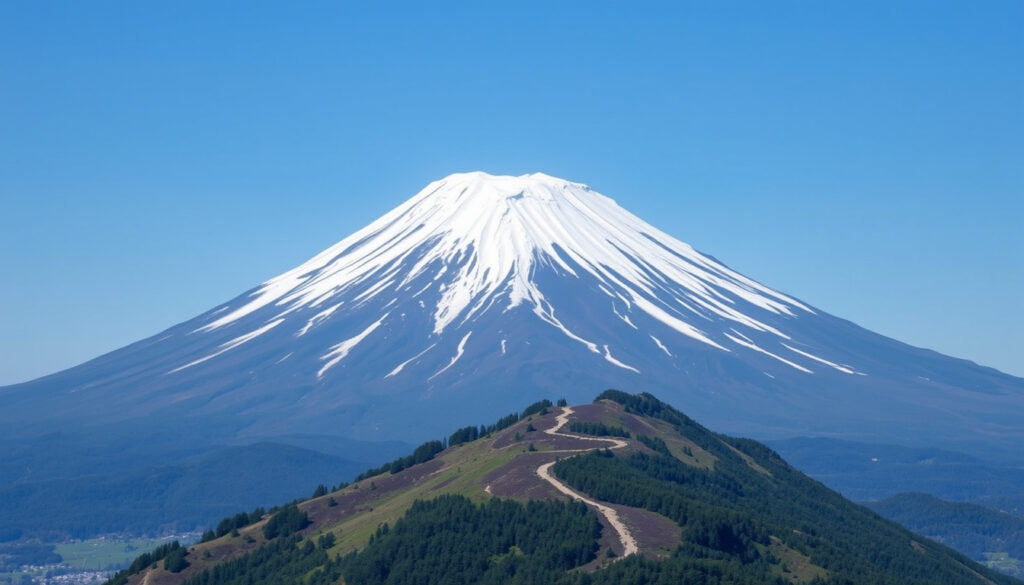
Fuji Mountain Guide: Location, Climbing Difficulty & Facts
You’ve seen the pictures—the perfect snow-capped cone rising above cherry blossoms or golden clouds. But Mount Fuji isn’t just a postcard; it’s a demanding climb that tests your legs and lungs.
Height: 3,776 m (12,389 ft) · Location: Honshu, Japan · Last eruption: 1707–1708 (Hoei eruption) · Climbing season: July to September · Climbing routes: 4 main routes · Average ascent time: 5–7 hours
Quick snapshot
- Difficulty rating: moderate to challenging (Japan Guide)
- Average ascent: 5–7 hours (Fujisan Climb)
- Required gear: layers, sturdy boots, headlamp (Japan National Tourism Organization)
- Climbing season: July–September (Fujisan Climb)
- No entrance fee required (Japan National Tourism Organization)
- Mountain huts and restaurants on trails (Japan Guide)
Here are six core facts that define Fuji Mountain’s identity—from its precise elevation to its official climbing window.
| Attribute | Value |
|---|---|
| Height | 3,776 m (12,389 ft) |
| Location | Honshu, Japan |
| Volcano Type | Active stratovolcano |
| Last Eruption | 1707–1708 (Hoei eruption) |
| Climbing Season | July to September |
| Number of Routes | 4 main routes |
Where is Fuji mountain located?
Mount Fuji sits on the island of Honshu, about 100 km southwest of Tokyo. It’s the centerpiece of Fuji-Hakone-Izu National Park and straddles Shizuoka and Yamanashi prefectures. Its location makes it a prominent landmark for the Tokyo metro area—on clear winter days, you can spot it from the capital’s skyscrapers.
What type of volcano is Mount Fuji?
Fuji is an active stratovolcano, meaning it’s built up of layers of lava, ash, and tephra from past eruptions. The Japan Meteorological Agency monitors it continuously as part of its volcanic warning system. The last major eruption was the Hoei eruption (1707–1708), which deposited ash as far as present-day Tokyo.
When was Mount Fuji’s last eruption?
The most recent confirmed eruption was the Hoei eruption, which began on December 16, 1707, and lasted into early 1708. It ejected a massive volume of tephra, creating a new crater on the east-southeast flank. Since then, Fuji has remained dormant, though it’s still classified as active.
What is the height of Mount Fuji?
Surveyed at 3,776.24 m (12,389 ft 3 in), Mount Fuji is Japan’s tallest mountain. That places it well above other notable Japanese peaks like Mount Kita (3,193 m) and Mount Hotaka (3,190 m). For context, it’s roughly the same height as Peru’s Alpamayo, but significantly shorter than Nepal’s 8,000 m giants.
Which city is Mount Fuji near?
The nearest major city is Tokyo, roughly 100 km east-northeast. Smaller cities near the mountain include Fujinomiya (Shizuoka) and Fujiyoshida (Yamanashi). Both are common starting points for climbers and offer direct bus access to trailheads.
Visitors coming from Tokyo will find Fuji easily reachable by train or bus, but cloud cover often hides the summit in summer. The mountain’s proximity to a megacity supercharges its draw, yet that same proximity means crowded trails and limited visibility during peak season.
How hard is it to climb Mount Fuji?
The climb is generally non-technical during the official season—you won’t need ropes, ice axes, or climbing harnesses. The difficulty comes from length, steepness, altitude, and altitude. Think of it as a stiff all-day hike that demands fitness and preparation.
How long does it take to climb Mount Fuji?
Ascending from the fifth station (the typical starting point at about 2,300 m) takes 5–7 hours. Descent ranges from 3–5 hours, depending on route and pace. Most climbers opt for a one-night stay at a mountain hut to catch sunrise.
Do you need oxygen to climb Fuji?
No oxygen bottle is required—Fuji’s summit altitude of 3,776 m is below the typical threshold where supplemental oxygen becomes necessary (around 5,000 m for most people). Altitude sickness is still possible, however. Common symptoms include headache, nausea, and shortness of breath. Acclimatization strategies, like climbing slowly and staying hydrated, help mitigate risk.
What is the weather like on Mount Fuji?
Weather on Fuji is notoriously fast-changing. Summer daytime temperatures at the fifth station sit around 15–20°C, while the summit can dip below freezing at night. Sudden wind gusts up to 80 km/h and falling rocks are hazards posted on the trail. October through May climbing is discouraged due to cold-weather danger.
A climber who treats Fuji like a casual day hike risks hypothermia or vertigo. The trade-off: packed trails in summer vs. empty slopes in off-season, when weather can turn deadly.
The catch: even fit climbers should allow a full day and prepare for rapid changes.
Why is Fuji mountain so famous?
Its fame stems from a blend of natural majesty, spiritual tradition, and artistic legacy. It’s a UNESCO World Heritage site (designated in 2013), a Shinto and Buddhist pilgrimage destination, and the subject of Katsushika Hokusai’s iconic woodblock series Thirty-six Views of Mount Fuji.
What are 5 facts about Mount Fuji?
- It’s Japan’s tallest peak at 3,776 m (BBC News).
- Last erupted in 1707–1708 (Wikipedia).
- Four main climbing routes: Yoshida, Subashiri, Gotemba, Fujinomiya (Japan Highlights).
- UNESCO World Heritage site since 2013 (BBC News).
- Sacred site with Shinto shrines and Buddhist temples (Wikipedia).
Is Fuji taller than Everest?
No. Mount Everest stands 8,848 m, more than double Fuji’s height. Fuji is the tallest mountain in Japan, while Everest is the tallest on Earth (above sea level). For a relatable scale: Fuji is roughly the height of Mont Blanc (4,808 m) plus an extra 4,000 m of Everest’s crustal uplift—or, in practical terms, Fuji is the height of a very tall alpine peak, not a Himalayan giant.
Fuji’s fame as a “gentle” cultural icon masks its real danger. Every year, climbers underestimate altitude symptoms and get caught in weather shifts that send rescue services scrambling.
The pattern: Fuji’s cultural icon status often overshadows its real dangers.
Can tourists go to Mount Fuji?
Yes, Mount Fuji is open to tourists year-round. However, the official climbing season runs only from early July to early September. Off-season ascents involve serious hazards—icy trails, avalanche risk, and no mountain hut services.
Can I climb Mount Fuji for free?
There is no entrance fee to climb Mount Fuji. However, voluntary contributions are encouraged at the trailhead. Most climbers spend money on bus transport to the fifth station, mountain hut accommodation (3,000–7,000 yen), food and water, and gear rentals. A weekend trip typically costs 15,000–25,000 JPY per person.
Are there restaurants on Mount Fuji?
Yes, mountain huts (called goya) on the Yoshida, Subashiri, and Fujinomiya routes serve basic meals—curry rice, instant noodles, and drinks. You’ll find vending machines at some stations, though prices increase with elevation. Restaurants at the fifth station are more plentiful and affordable.
When is Mount Fuji visible?
Visibility varies strongly by season. Winter months (November–February) offer the clearest views: cold, dry air reduces haze. Summer climbing season often brings heavy cloud cover, especially in the afternoon. Early morning hours before sunrise provide the best chance for an unobstructed summit view. Dawn is the sweet spot.
Climbing route comparison
Four routes diverge in difficulty, distance, and character—here’s how they stack up.
| Route | Starting Elevation | Ascent Time | Difficulty | Side |
|---|---|---|---|---|
| Yoshida | 2,300 m | 5–7 h | Moderate | Yamanashi |
| Subashiri | 2,000 m | 5–7 h | Moderate-high | Yamanashi |
| Gotemba | 1,440 m | 7–10 h | Challenging | Shizuoka |
| Fujinomiya | 2,400 m | 4–6 h | Steep, short | Shizuoka |
The pattern: Yoshida is the gentler entry point for first-timers and sunrise hikers, while Fujinomiya trades distance for steepness. Gotemba tests endurance with the longest elevation gain.
What this means: a beginner should start on Yoshida and plan a two-day ascent with a hut stay; a fit, experienced climber may enjoy Fujinomiya’s direct vertical push.
Pros and Cons of Climbing Mount Fuji
Upsides
- Non-technical climb—no ropes or technical gear needed
- Iconic sunrise experience from summit
- Well-maintained trails with mountain huts
- No entrance fee
Downsides
- Very crowded in July–August
- Altitude sickness risk for unprepared
- Weather can turn dangerous quickly
- Limited climbing season (only 2 months)
Steps to Plan Your Fuji Climb
- Pick your route – Start with Yoshida if it’s your first time.
- Book a mountain hut – Reserve well ahead; huts fill fast.
- Check the weather – Use Fujisan Climb official site for updates.
- Pack essentials – Layered clothing, sturdy shoes, headlamp, water, snacks.
- Get bus tickets – Book Shinjuku–Fuji Subaru Line bus in advance.
- Start early – Aim to begin ascent by 10 AM for a two-day plan.
- Walk slowly – Guard against altitude sickness.
- Enjoy sunrise – Time your summit arrival for dawn.
The pattern: careful planning increases the chances of a safe and rewarding climb.
Timeline signal
Fuji’s history and tourism rhythm follow a clear chronology.
- 1707–1708 – Last major eruption (Hoei eruption) (Wikipedia)
- 19th century – Modern climbing routes established (Wikipedia)
- 2013 – Designated UNESCO World Heritage site (BBC News)
- July–September annually – Official climbing season (Fujisan Climb)
The pattern: Fuji’s climbing infrastructure has evolved for over a century, yet the mountain’s main risk—eruption—remains unpredictable. For a climber, the safest window is the official season, when monitoring and rescue are active.
Confirmed facts
Confirmed facts
- Height: 3,776 m (Wikipedia)
- Location: Honshu, Japan (BBC News)
- Last eruption: 1707–1708 (Wikipedia)
- Climbing season: July–September (Fujisan Climb)
- Volcano type: Stratovolcano (Wikipedia)
What’s unclear
- Exact number of annual visitors (estimates vary between 200,000 and 300,000) (Fujisan Climb)
- Effect of future volcanic activity on climbing accessibility (Wikipedia)
- Exact climbing season dates may shift yearly (some sources cite July 1–September 10) (Fujisan Climb)
- Trail and hut conditions outside official season are not fully documented
- Current number of mountain huts and their seasonal availability is uncertain
What this means: while many facts are certain, some details remain uncertain.
Quotes from Experts
“Yoshida Trail is the most popular and accessible route, with many facilities and a separate descent route.”
Japan National Tourism Organization (official travel bureau)
“The main challenge of climbing Mount Fuji is its length, steepness in some sections, and altitude rather than technical climbing skill.”
“The Fujinomiya Trail is the shortest route but also the steepest among the main Mount Fuji routes.”
For a first-time climber from Tokyo, the choice is clear: pick the Yoshida route in July or August, book a mountain hut, and pack for cold summit temperatures. The reward—a sunrise over the clouds with Tokyo in the distance—makes the effort worthwhile. For those who skip hut reservations and rush the ascent, the gamble is altitude sickness and a two-hour descent in the dark.
guide2japan.com, globalsummitguide.com, jrailpass.com, fujimountainguides.com, samuraicarjapanjdm.jp, fujisan-kkb.jp
For those seeking more specific data, the detailed height and facts guide offers a deeper dive into the mountain’s elevation and volcanic history.
Frequently asked questions
Is it safe to climb Mount Fuji alone?
Yes, but prepare well. Solo climbers should stick to the climbing season, use well-traveled routes like Yoshida, and inform someone of their plans. The mountain has cell reception in many sections, but it’s not guaranteed.
What equipment do I need for the climb?
Essential gear includes layered clothing (synthetic base, fleece, windproof jacket), sturdy hiking boots, headlamp with spare batteries, 1–2 liters of water, high-energy snacks, and a 1,000 yen bill for mountain hut fees. Many climbers also bring trekking poles and sunglasses.
Can I drive to the fifth station?
Yes, there’s a road open to private vehicles during the climbing season. However, shuttle buses from the base stations are also available and often more convenient due to limited parking. Check road conditions before departure.
Are there guided tours available?
Yes, many local operators offer guided climbs from Tokyo or nearby cities. Tours typically include transport, a guide, and a hut reservation. Prices range from 15,000–30,000 JPY per person.
How crowded is Mount Fuji during peak season?
Very. The Yoshida Trail sees 3,000–5,000 people per day on weekends in August. Expect queues on narrow sections and at hut check-ins. If you prefer solitude, climb on a weekday or earlier in July.
What is the best time to see the sunrise from the summit?
Sunrise (called go-raiko) is visible around 4:30–5:00 AM during peak season. Aim to reach the summit by 4:00 AM if possible. Cloud cover can obscure the view, so check forecasts the evening before.
Are there any fees for using mountain huts?
Yes, mountain huts charge 3,000–7,000 JPY for a night’s stay, including dinner and breakfast. Reservations are required and made online in advance. Some huts also accept donations for basic services.
Can I climb at night (night hiking)?
Yes, many climbers hike at night to reach the summit for sunrise. Night hiking is common on the Yoshida and Subashiri trails. A headlamp is mandatory, and trails remain well-marked even after dark.
More related posts
 Kirk Douglas: Biography, Stroke, Marriage, and Estate
 Ed Warren: The Real Demonologist Behind The Conjuring
 Zach Hyman: Injury, Salary, Family, and Career Facts
 Bashar al-Assad: Fall, Exile in Moscow, and What Happened Next
 Kamal Haasan: Relationships, Marriages, Religion & Children
 Aretha Franklin: Her Life, Death and Estate Battle
 Bobby Deol vs Sunny Deol: Who Is Richer in 2024
 Traductor Inglés Español Gratis – Best Options 2025