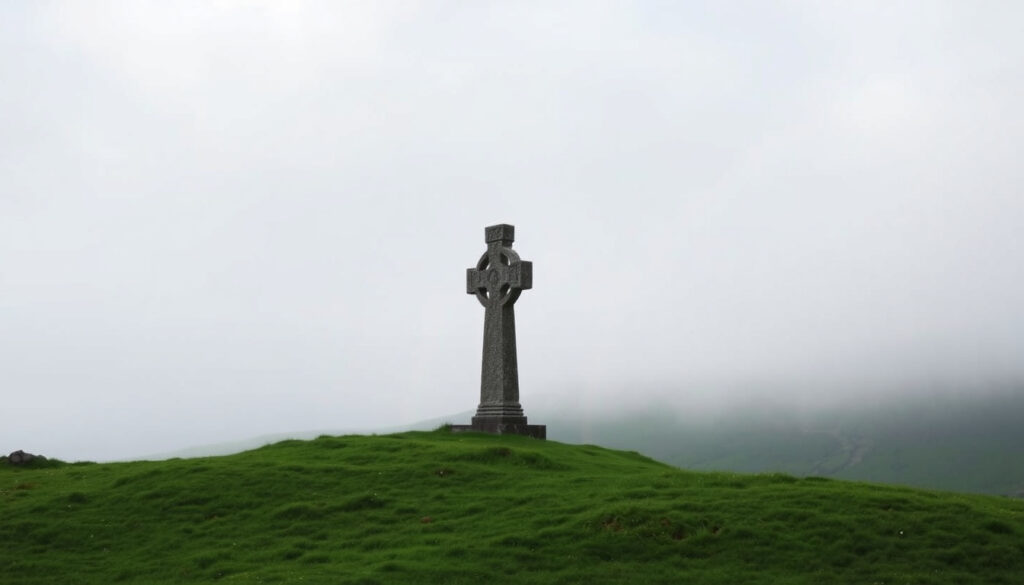
Saint Patrick: His Life, Miracles, and Legacy in Ireland
Most people recognize Saint Patrick as the face of green beer and parades every March 17. But the real man behind the holiday lived a life far removed from modern celebrations — captured by Irish raiders at age 16, enslaved for six years, and later returning as a missionary to the very people who held him captive. This article separates the historical Patrick, a Romano-British bishop, from the medieval legends and modern folklore that have grown around him.
Born: c. 385 AD, Roman Britain ·
Died: 17 March 461 AD, Saul, Ireland ·
Feast Day: 17 March ·
Patron Saint of: Ireland, engineers, paralegals, Nigeria ·
Known For: Converting Ireland to Christianity, using shamrock to explain Trinity
Quick snapshot
- Patrick was a fifth-century Christian missionary and bishop in Ireland (Wikipedia)
- He wrote the Confessio, a firsthand account of his life (Irish Myths)
- He died on 17 March 461 AD (Archdiocese of San Antonio)
- Exact birthplace (Scotland vs. Wales) is uncertain (St. Patrick’s Leicester school)
- Whether he drove snakes from Ireland — no snakes existed post-Ice Age (Baltimore Magazine)
- Number of people reportedly raised from the dead cannot be verified (Church of St. Patrick, Huntington)
- c. 385 AD: Born in Roman Britain (Archdiocese of San Antonio)
- c. 401 AD: Captured by Irish raiders (Baltimore Magazine)
- c. 432 AD: Returns as a missionary bishop (Baltimore Magazine)
- 17 March 461 AD: Dies at Saul, County Down (Archdiocese of San Antonio)
- Continued historical research into Patrick’s life using his own writings (Irish Myths)
- Annual St. Patrick’s Day celebrations evolving globally (St. Patrick’s Festival Waterford)
Six key facts about Saint Patrick’s life, from his birth name to his major works:
| Attribute | Details |
|---|---|
| Full Name | Maewyn Succat (later Patricius) |
| Birth | c. 385 AD, Roman Britain |
| Death | 17 March 461 AD, Saul, Ireland |
| Feast Day | 17 March |
| Patronage | Ireland, engineers, paralegals, Nigeria |
| Major Works | Confessio, Letter to Coroticus |
What is Saint Patrick known for?
Missionary work in Ireland
- Patrick is widely regarded as the patron saint of Ireland, credited with bringing Christianity to the island in the 5th century (Wikipedia).
- He is traditionally said to have established as many as 300 churches and baptized more than 100,000 people (Church of St. Patrick, Huntington (parish history)). However, some scholars note Christianity was already present in Ireland before his arrival (Irish Folklore Blog).
- His Confessio is one of the earliest documents known to have been written in Ireland (Irish Myths).
Use of the shamrock
- Later tradition holds that Patrick used the three-leaf shamrock to explain the Holy Trinity to the Irish (Church of St. Patrick, Huntington). This detail belongs to medieval legend rather than securely documented biography.
Patron saint status
- Patrick is the primary patron saint of Ireland, and also patron of engineers, paralegals, and Nigeria (Wikipedia).
Bottom line: Saint Patrick is known as the missionary who popularized Christianity in Ireland, but the historical record shows he was one of several early evangelists. The shamrock story remains a beloved tradition, not a verified fact.
Patrick’s own writings — the Confessio and Letter to Coroticus — provide the only firsthand evidence of his life, making them invaluable for separating fact from later embellishment.
Why is St. Patrick’s Day celebrated?
Religious origins
- St. Patrick’s Day commemorates the death of Saint Patrick on March 17, 461 AD (Archdiocese of San Antonio).
- It began as a religious feast day in the 17th century, observed by the Catholic Church, the Anglican Communion, and the Eastern Orthodox Church (Wikipedia).
Cultural celebration
- Over time, the day evolved into a celebration of Irish culture, with parades, wearing green, and public festivities (St. Patrick’s Festival Waterford).
- In Ireland, it is a public holiday, and the day traditionally includes a lifting of Lenten restrictions (Wikipedia).
Global observance
- St. Patrick’s Day is now celebrated in more countries than any other national festival, including the United States, Canada, Australia, and Japan (Baltimore Magazine).
- The modern focus on drinking and green attire is a 20th-century innovation, largely driven by Irish diaspora communities (Irish Folklore Blog).
Bottom line: St. Patrick’s Day started as a solemn religious feast and became a global cultural phenomenon. The historical Patrick would likely recognize little of the modern parade, but his legacy of cross-cultural connection remains central.
The very popularity of St. Patrick’s Day risks overshadowing the historical figure. For those seeking the real story, the holiday’s commercial veneer can be a barrier to discovering Patrick’s own account.
Is Saint Patrick Irish or Scottish?
Birthplace in Roman Britain
- Saint Patrick was born in Roman Britain, likely in modern-day Scotland or Wales, around 385 AD (St. Patrick’s Leicester school).
- His Roman name, Patricius, suggests a Romano-British family background (St. Patrick’s Festival Waterford).
Capture and enslavement in Ireland
- At age 16, he was captured by Irish raiders and taken to Ireland as a slave, where he worked as a shepherd for six years (Baltimore Magazine).
- During this time, he turned to Christianity, which he later described in his Confessio (Irish Myths).
Return as a missionary
- After escaping, Patrick returned to Britain but later felt called to go back to Ireland as a missionary (Archdiocese of San Antonio).
- He is not Irish by birth but became the patron saint of Ireland precisely because of his transformative impact on the island (Wikipedia).
The implication: Patrick’s Irish identity is earned, not inherited. His life story — a Briton enslaved in Ireland who returns to convert his captors — is a narrative of reconciliation that transcends modern national boundaries.
What miracle did St. Patrick do?
Driving snakes from Ireland
- The most famous miracle is driving snakes from Ireland. However, scientific evidence shows snakes never existed in Ireland after the last Ice Age (Baltimore Magazine). The story likely symbolizes Patrick’s eradication of pagan beliefs.
Raising people from the dead
- Later hagiographies claim Patrick raised 33 people from the dead (Church of St. Patrick, Huntington). These accounts are part of medieval legend and lack contemporary evidence.
The fire on Slane Hill
- According to tradition, Patrick defied the High King by lighting a Paschal fire on the Hill of Slane before the king’s own fire was lit, demonstrating his spiritual authority (Wikipedia).
The pattern: Patrick’s miracles function as allegories for his missionary success. The snake story, while false as natural history, underscores his role in supplanting earlier traditions.
How did St Patrick die?
Date and place of death
- Saint Patrick died on 17 March 461 AD at Saul, County Down, Ireland (Archdiocese of San Antonio).
Cause of death
- The exact cause of death is not recorded, but tradition holds he died peacefully, possibly of natural causes associated with old age (Wikipedia).
Burial site
- Patrick is said to be buried at Down Cathedral in Downpatrick, Northern Ireland, alongside Saints Brigid and Columba (St. Patrick’s Leicester school).
Why this matters: The death of Patrick marks the beginning of his legacy. His feast day — the date of his death — became a global celebration, cementing his influence far beyond his lifetime.
What are 10 facts about St. Patrick?
- He was born in Roman Britain around 385 AD (Archdiocese of San Antonio).
- He was enslaved for six years (Baltimore Magazine).
- He returned to Ireland as a bishop (Wikipedia).
- He used the shamrock as a teaching tool (later tradition) (Church of St. Patrick, Huntington).
- He is credited with converting the Irish (Wikipedia).
- He died on March 17, 461 AD (Archdiocese of San Antonio).
- His feast day is March 17 (Wikipedia).
- He is the patron saint of Ireland (Wikipedia).
- The snake legend is a myth (Baltimore Magazine).
- He wrote two surviving works: Confessio and Letter to Coroticus (Irish Myths).
Bottom line: These ten facts combine historical certainty and tradition. The core of Patrick’s story — his British birth, enslavement, escape, and missionary return — is well-attested. The miracle stories and shamrock teaching are later embellishments.
Timeline of Saint Patrick’s Life
- c. 385 AD — Born in Roman Britain (likely Scotland or Wales) (Archdiocese of San Antonio)
- c. 401 AD — Captured by Irish raiders, enslaved for six years (Baltimore Magazine)
- c. 407 AD — Escapes slavery, returns to Britain (Wikipedia)
- c. 432 AD — Returns to Ireland as a Christian missionary bishop (Baltimore Magazine)
- 5th century — Converts many Irish, establishes churches and monasteries (Irish Myths)
- 17 March 461 AD — Dies at Saul, County Down (Archdiocese of San Antonio)
- Annually on 17 March — Feast day celebrated globally (Wikipedia)
The trade-off: Historians agree on the broad outline of Patrick’s life, but specific dates and the scope of his mission remain debated. The timeline above represents the most widely accepted scholarly consensus.
Confirmed facts
- Saint Patrick was a real historical figure who lived in the 5th century (Wikipedia)
- He was a missionary in Ireland (Archdiocese of San Antonio)
- He wrote the Confessio (Irish Myths)
- He died on 17 March 461 AD (Archdiocese of San Antonio)
What’s unclear
- Exact birthplace (Scotland vs. Wales) (St. Patrick’s Leicester school)
- Whether he drove snakes from Ireland (legend) (Baltimore Magazine)
- Number of people raised from the dead (Church of St. Patrick, Huntington)
- Whether he was the first bishop of Ireland (Church of St. Patrick, Huntington)
“I, Patrick, a sinner, the most unlearned of all the faithful, utterly despicable in the eyes of many — this is how I began my Confessio, giving an account of my conversion and my mission.”
— Saint Patrick, Confessio (as quoted by Irish Myths)
“The snakes story is false because snakes never returned to Ireland after the last Ice Age. The legend likely symbolizes Patrick’s role in driving paganism out of Ireland.”
— Baltimore Magazine, on the snake myth
“Patrick is known for his humility and his dedication to spreading the Christian faith. His writings reveal a man deeply aware of his own limitations.”
— Archdiocese of San Antonio, biographical summary
For modern Ireland, the legacy of Saint Patrick is not found in miracles but in the resilience of a man who turned captivity into mission. The historical truth offers a richer foundation for national pride than the snake myth ever could. For anyone celebrating St. Patrick’s Day, the choice is between honoring the real Romano-British missionary or the composite legend — and the real story, grounded in Patrick’s own words, is ultimately more compelling.
Frequently asked questions
What is Saint Patrick the patron saint of?
Saint Patrick is the primary patron saint of Ireland, as well as patron of engineers, paralegals, and Nigeria (Wikipedia).
Why is Saint Patrick associated with the shamrock?
Later tradition holds that Patrick used the three-leaf shamrock to explain the Holy Trinity to the Irish people. This is a medieval legend, not a historical fact (Church of St. Patrick, Huntington).
Did Saint Patrick really drive snakes out of Ireland?
No. Scientific evidence shows snakes never existed in Ireland after the last Ice Age. The story is a metaphor for Patrick’s role in converting Ireland from paganism to Christianity (Baltimore Magazine).
Where is Saint Patrick buried?
Tradition says Saint Patrick is buried at Down Cathedral in Downpatrick, Northern Ireland, alongside Saints Brigid and Columba (St. Patrick’s Leicester school).
What is the Confessio of Saint Patrick?
The Confessio is an autobiographical work written by Saint Patrick himself. It is one of the earliest documents known to have been written in Ireland and provides firsthand insight into his life and mission (Irish Myths).
How did Saint Patrick become a saint?
Saint Patrick was venerated as a saint by popular acclaim before the formal canonization process existed. His status as patron saint of Ireland was recognized by the Catholic Church and other Christian denominations (Wikipedia).
Is St. Patrick’s Day a religious holiday?
Originally it is a religious feast day observed by the Catholic Church, Anglican Communion, and Eastern Orthodox Church. In Ireland it is a public holiday, and globally it has also become a cultural celebration of Irish identity (Wikipedia).
More related posts
 Mike Wazowski: Voice Actor, Meme, Girlfriend & Facts
 Meg Ryan: Biography, Relationships, and Hollywood Exit
 Why Is Ariana Grande Losing Weight? Health & Relationships
 Bryan Kohberger: Evidence, Alibi, Plea & Sentencing
 Gavin Casalegno: Biography, Age, Wife, Ethnicity & FAQs
 IND vs SA Test 2025: Pant Captaincy, Gill Replacement, Records
 Brandon Ingram: Trade, Contract, Injury & Personal Life