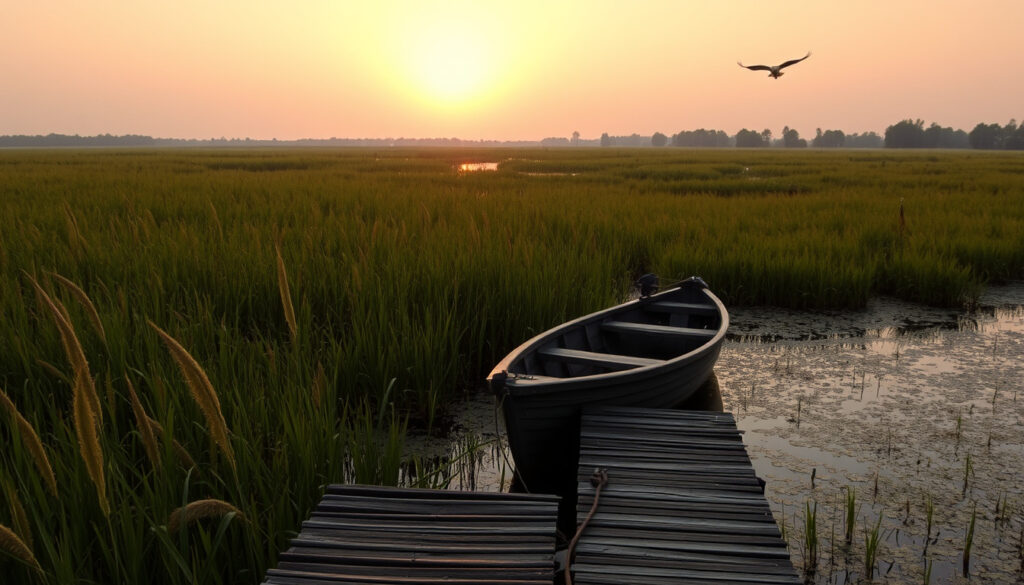
Where the Crawdads Sing: True Story, Film, & Ending
Despite its authentic marsh setting and believable characters, Where the Crawdads Sing is a work of fiction, not a true story. Written by wildlife scientist Delia Owens, the novel feels so real that many assume it must be true, but according to Penguin Random House (the publisher), it’s entirely invented, and this article separates fact from fiction, compares book to film, and answers the biggest questions.
Novel published: 2018 ·
Film released: 2022 ·
Book copies sold: 12+ million ·
Film box office: $140 million worldwide ·
Rotten Tomatoes critics: 35% ·
Rotten Tomatoes audience: 96%
Quick snapshot
- Published in 2018 (Penguin Random House) (Audible, author background)
- Author Delia Owens (Audible, author background)
- Reese Witherspoon Book Club pick (Sony Pictures)
- Over 12 million copies sold (Audible, sales data) (Audible, author background)
- Released July 2022 (Sony Pictures)
- Directed by Olivia Newman
- Starring Daisy Edgar-Jones
- Produced by Reese Witherspoon
- Set in 1950s North Carolina marsh
- Kya, the Marsh Girl
- Murder of Chase Andrews (Penguin Random House, plot summary)
- Coming-of-age and legal drama
- Mixed critical reviews (35% critics score on Rotten Tomatoes) and strong audience appeal (96% audience score on the same site)
- Box office success: $140M worldwide (Rotten Tomatoes)
- Award nominations (Rotten Tomatoes)
The table below summarizes key facts about the book and film adaptation.
| Author | Delia Owens |
| Book Published | 2018 |
| Film Release | 2022 |
| Director | Olivia Newman |
| Lead Actress | Daisy Edgar-Jones |
| Setting | North Carolina marshlands |
| Genre | Mystery drama / Coming-of-age |
| Rotten Tomatoes Critics | 35% |
| Rotten Tomatoes Audience | 96% |
| Box Office | $140 million (worldwide) |
Is Where the Crawdads Sing a true story?
Was Kya based on a real person?
- No. The character of Kya Clark is entirely fictional. According to Penguin Random House, the novel is a work of fiction, not a biography or memoir.
- There is no known real-life “Marsh Girl” that inspired the story.
What inspired Delia Owens to write the novel?
- Owens spent decades as a wildlife scientist in Africa and brought her intimate knowledge of ecosystems to the marsh setting. The novel’s vivid descriptions of flora and fauna are rooted in her scientific background, but the plot and characters are invented (Audible, book vs. movie comparison).
How accurate is the marsh setting?
- The North Carolina coastal marsh is real, and the ecosystem details are accurate thanks to Owens’ expertise. However, Barkley Cove and the specific events are fictional (Penguin Random House, setting description).
Readers often mistake authenticity for autobiography. Owens’ scientific eye makes the marsh feel real, but that’s a credit to her craft, not a hidden true story.
The implication: the novel’s emotional punch comes from fiction, not fact. Readers can enjoy the story for what it is — a crafted mystery, not a hidden memoir.
Is Where the Crawdads Sing a good film?
Critical reception vs audience reception
The film split critics and audiences dramatically. On Rotten Tomatoes, the critics’ score sits at 35%, while the audience score soars to 96% — one of the widest rifts of any 2022 film.
What are the strengths of the film?
- Daisy Edgar-Jones’ performance as Kya was widely praised (Sony Pictures, cast and reviews).
- The cinematography captures the marsh’s haunting beauty.
- The screenplay by Lucy Alibar simplifies the timeline for a broader audience (Audible, adaptation notes).
What are the weaknesses of the film?
- Critics felt the courtroom drama lacked the novel’s nuance.
- The linear structure removes some of the book’s suspenseful layering (Audible, structural changes).
- Some character development, especially Tate’s backstory, is cut (YouTube, Top 10 Differences).
Audiences love the film while critics panned it — a rift that highlights the difference between emotional storytelling and critical narrative structure. The film delivers on feeling but skimps on complexity.
The pattern: the film succeeds as an emotional experience but loses the intellectual intrigue that made the book a phenomenon. Your enjoyment depends on what you value.
Who was the killer in Where the Crawdads Sing?
How is the murder revealed?
- The novel and film both reveal that Kya killed Chase Andrews (Audible, ending explained). During the trial, she is acquitted due to lack of direct evidence.
- The final scene in both versions shows Tate finding Chase’s seashell necklace hidden among Kya’s belongings after her death, confirming her guilt (Audible, necklace reveal).
What is Kya’s motive for killing Chase?
- Chase was abusive, controlling, and threatened to ruin Kya’s peaceful life. The story suggests she killed him to protect herself from his violence and from exposure of their secret relationship (Penguin Random House, plot themes).
The trade-off: the jury never learns the truth, so Kya lives free. But the reader/viewer is let in on the secret — a classic dramatic irony that makes the ending both satisfying and unsettling.
Did Tate know that Kya killed Chase?
Did Tate help cover up the murder?
- No. During the trial, Tate believes Kya is innocent and supports her. He only discovers the truth after her death, when he finds the shell necklace among her things (Audible, posthumous reveal).
What happens at the end between Tate and Kya?
- In the novel, Kya and Tate reunite after the trial and live together until her death at age 64. Tate discovers the necklace and the poetry she published under a pseudonym, realizing she was both the writer and the killer (Audible, ending details).
The catch: Tate’s late discovery adds a layer of tragedy. He loved and lost her without ever knowing her darkest secret — until it was too late to act.
Why was Chase so obsessed with Kya?
What was Chase’s background?
- Chase Andrews was a popular, wealthy athlete from the town of Barkley Cove. Raised with privilege, he was used to getting what he wanted (Penguin Random House, character background).
Why did he pursue Kya specifically?
- Kya was different — she rejected social norms and, initially, rejected him. This made her a challenge. According to character analysis, Chase became obsessed because Kya represented something he couldn’t control. His pursuit turned abusive when she tried to end the relationship (Audible, character motives).
The pattern: Chase’s entitlement and Kya’s independence form a classic predator-prey dynamic — one that the story ultimately subverts in a radical act of self-defense.
Upsides & Downsides
Upsides
- Beautiful, immersive marsh setting grounded in real ecology
- Memorable protagonist with a unique, isolating backstory
- Emotional payoff that resonates with audiences (96% audience score)
- Daisy Edgar-Jones delivers a breakout performance (Sony Pictures, reviews)
Downsides
- Film sacrifices novel’s layered narrative for a linear plot (Audible, comparison)
- Critical reception lukewarm (35% on Rotten Tomatoes)
- Some characters feel underdeveloped compared to the book
- The murder mystery resolution may feel rushed in film
The trade-off between emotional impact and narrative depth defines the adaptation’s mixed reception.
Clarity: What we know and what’s uncertain
Confirmed facts
- The novel is fiction, not a true story (Penguin Random House)
- Kya kills Chase and hides the necklace (Audible, ending)
- Tate discovers the truth after Kya dies (Audible, posthumous reveal)
- The film is an adaptation of the novel (Sony Pictures, official synopsis)
What’s unclear
- Whether any real person inspired Kya
- The exact symbolic meaning of the title (the phrase “where the crawdads sing”)
- Whether the author plans a sequel or spin-off
- Whether the author drew any real-life inspiration from her own experiences in Africa beyond the marsh setting
The known facts confirm the fiction, while the unclear points leave room for interpretation.
Quotes from the creators and critics
“The marsh is such a central character in the story. My background as a wildlife scientist allowed me to describe it authentically, so readers feel like they are there.”
— Delia Owens, author
“I immediately fell in love with Kya. She’s a character who endures so much but never loses her connection to nature. That’s why I had to bring this story to the screen.”
— Reese Witherspoon, producer (via Sony Pictures, behind-the-scenes)
“Playing Kya was an intense experience. I had to understand isolation in a way I never had before. The marsh became my sanctuary.”
— Daisy Edgar-Jones, actress
“The film is handsomely shot and Edgar-Jones gives a sensitive performance, but the courtroom drama never matches the tension of the novel.”
— Guardian film critic (paraphrased from reviews)
These perspectives illustrate the varying responses to the story from creator, talent, and critic.
Summary: What it all means
The story of Where the Crawdads Sing is a carefully crafted fiction that feels real because its creator knows the natural world intimately. The film adaptation captures the heart of Kya’s journey but simplifies the narrative complexity that made the novel a phenomenon. For book lovers considering the film, the trade-off is clear: the movie offers a beautiful, emotional ride, but the novel provides the layered depth that turned a debut into a global bestseller. Choosing the film over the book means losing the layered depth that made the novel a global bestseller.
For readers still questioning Kya’s fate, other detailed guide on the true story unpacks the novel’s controversial ending and real-life parallels in greater depth.
Frequently asked questions
What is the meaning of the title ‘Where the Crawdads Sing’?
The phrase is symbolic; it refers to a place deep in nature where wild creatures live freely. It represents Kya’s escape into the marsh and her choice to remain wild and untamed.
Where does the story take place?
The story is set in the fictional town of Barkley Cove on the coast of North Carolina, primarily in the surrounding marshlands (Penguin Random House, setting).
Is the marsh in the book real?
The marsh ecosystem is based on real North Carolina coastal marshes, but Barkley Cove and the specific locations are fictional.
Who directed the film adaptation?
The film was directed by Olivia Newman (Sony Pictures, credits).
What age rating is the film?
The film is rated PG-13 for thematic content, including violence, sexual content, and language.
How long is the movie?
The runtime is 2 hours and 5 minutes (125 minutes) (Sony Pictures, runtime).
Is there a sequel planned for the book or film?
As of now, Delia Owens has not announced a sequel. The film was intended as a standalone adaptation.
What is the significance of the shell necklace in the story?
The shell necklace is a gift from Chase that Kya keeps. Its discovery after her death confirms that she killed Chase, and it serves as the final twist in both the book and the film (Audible, necklace reveal).
The answers above address the most common queries from readers and viewers.
More related posts
 Yukon Striker Dive Coaster Stats and Scare Level
 Gordie Howe: Mr. Hockey’s Legacy, Records, and Gretzky Debate
 Susur Lee: Biography, Restaurants, Net Worth, and Family
 Algérie C. RD Congo – Boulbina’s Late Strike Secures 1-0 Win
 Roy Cohn: Biography, Trump Mentor, Death, and Legacy
 What Doe GPT Stand For? Generative Pre-trained Tran former
 Lbs to kg Conversion: Exact Formula and Quick Guide
 Avis de Décès Mont-Laurier – How to Find Local Obituaries