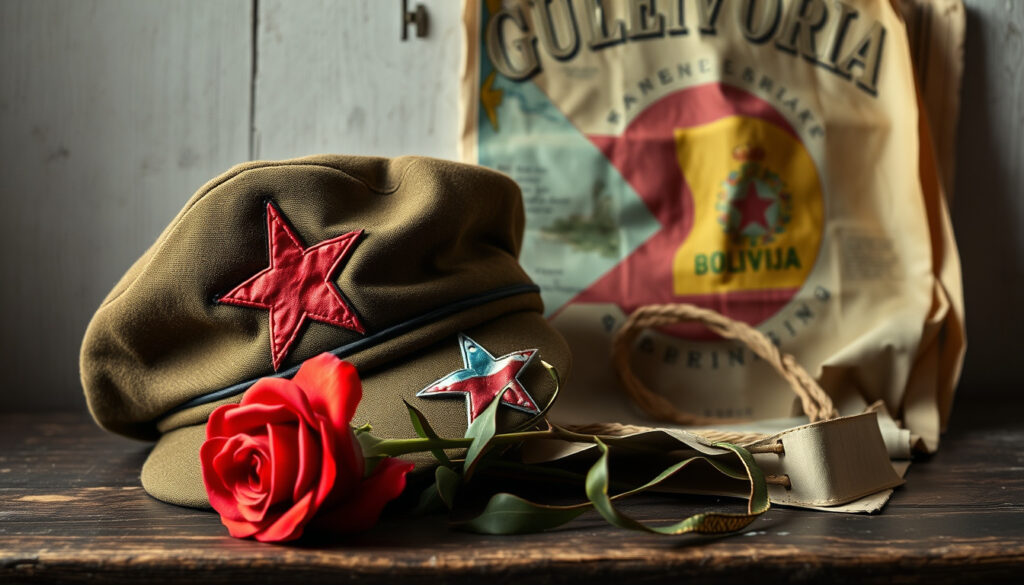
Che Guevara: Cuban Revolutionary, Death, and Legacy
Few historical figures divide opinion quite like the man with the beret. Ernesto “Che” Guevara helped reshape Cuba, inspired revolutions across Latin America, and was executed at 39 — yet his face still sells T-shirts, and this article separates the documented facts from the myth using declassified records, family accounts, and the controversies surrounding his death.
Full name: Ernesto “Che” Guevara de la Serna ·
Born: 14 May 1928, Rosario, Argentina ·
Died: 9 October 1967, La Higuera, Bolivia ·
Known for: Key figure in the Cuban Revolution ·
Cause of death: Execution by firing squad
Quick snapshot
- Led the Cuban Revolution alongside Fidel Castro (Britannica)
- Executed by firing squad on 9 October 1967 (U.S. Office of the Historian)
- Irish ancestry through the Lynch family (The World)
- Exact wording of his last words varies among sources (The New Republic)
- Whether his Irish heritage shaped his identity remains debated (The Irish Story)
- 1965: Leaves Cuba to export revolution (The Irish Story)
- 9 Oct 1967: Executed in Bolivia (CheGuevara.org)
- His legacy continues to inspire leftist movements (Britannica)
- Irish postage stamp honouring Guevara sparked controversy in 2017 (BBC)
Che Guevara’s image is a global symbol of rebellion, yet the man himself was a disciplined Marxist who believed in armed struggle as the only path to justice. The gap between icon and individual is wider than most casual observers realize.
The table below summarizes key biographical information about Che Guevara.
| Attribute | Value |
|---|---|
| Birthdate | 14 May 1928 |
| Birthplace | Rosario, Argentina |
| Nationality | Argentine |
| Major role | Cuban Revolutionary leader, Marxist theorist |
| Death date | 9 October 1967 |
| Place of death | La Higuera, Bolivia |
| Cause of death | Execution by firing squad |
Why is Che Guevara famous?
The Cuban Revolution
- Guevara joined Fidel Castro’s 26th of July Movement in 1955 and became a key commander (Britannica).
- He helped lead the guerrilla campaign that overthrew Fulgencio Batista in 1959 (History.com).
- After the revolution, he held top government posts including Minister of Industries (Britannica).
The iconic photograph and global symbol
- Alberto Korda’s 1960 photo, “Guerrillero Heroico,” became one of the most reproduced images in history (National Geographic).
- Guevara’s face adorns posters, murals, and merchandise worldwide, often stripped of political context (BBC).
The implication: Guevara’s fame rests on two distinct pillars — his concrete historical actions and his abstract iconography. These are often conflated, making it hard to discuss one without the other.
What did Che Guevara do to Cuba?
Guerrilla warfare and the overthrow of Batista
- Guevara commanded the rebel column that captured Santa Clara in December 1958, a decisive victory (Britannica).
- He was promoted to commander (Comandante) and later appointed director of the military prison La Cabaña, where executions of Batista loyalists occurred (History.com).
Economic reforms and industrialization
- As Minister of Industries, Guevara pushed rapid nationalization and land reform (The Irish Story).
- He championed literacy campaigns and free healthcare, but his economic policies led to shortages and inefficiencies (The New Yorker).
- He advocated armed revolution abroad, straining Cuba’s relations with other Latin American governments (The Guardian).
Guevara’s social achievements in Cuba — literacy, healthcare — came at the cost of economic centralization and political repression. For Cubans, the benefits were unevenly felt, and his departure in 1965 left a mixed legacy.
What this means: Guevara’s impact on Cuba was double-edged. He helped deliver social justice reforms but also institutionalized a system that later cracked down on dissent. The trade-off remains a central debate.
Why was Che Guevara assassinated?
The Bolivian campaign
- Guevara arrived in Bolivia in 1966 to organize a guerrilla foco aimed at sparking a continent-wide revolution (U.S. Office of the Historian).
- His small group suffered early setbacks in the rugged countryside and failed to attract local support (U.S. Office of the Historian).
- He was captured in the Quebrada del Yuro ravine on 8 October 1967 (CheGuevara.org).
Foreign intervention and execution
- The Bolivian army’s Second Ranger Battalion, advised by the CIA, captured and held him overnight (U.S. Office of the Historian).
- On 9 October, orders from the Bolivian Army headquarters authorized his killing (U.S. Office of the Historian).
- Sergeant Mario Terán carried out the execution by firing squad (CheGuevara.org).
Some accounts suggest Guevara was already wounded or that the execution was a summary killing without trial. The U.S. State Department records confirm the order came from the Bolivian high command, but the full chain of political responsibility remains disputed.
The pattern: Guevara’s death was a Cold War proxy action. The Bolivian government, with CIA backing, eliminated a revolutionary who threatened regional stability. The lack of a trial turned the execution into a rallying cause.
What were Che Guevara’s last words?
The final moments
- According to declassified CIA documents and witness accounts, Guevara reportedly said: “I know you’ve come to kill me. Shoot, coward, you are only going to kill a man.” (The New Republic)
- The exact phrasing varies among sources, and the quote is sometimes disputed (CheGuevara.org).
- After his death, his hands were amputated and sent to Buenos Aires for fingerprint identification (Smithsonian Magazine).
- His remains were eventually returned to Cuba in 1997 and buried in a mausoleum in Santa Clara (BBC).
Why this matters: The last words story humanizes Guevara in his final seconds, but the uncertainty around them shows how myth-building begins even at the moment of death. The removal of his hands underscores the cold forensic logic of his enemies.
Was Che Guevara part Irish?
Family ancestry
- Guevara’s paternal grandmother, Ana Lynch, was of Irish descent, tracing back to Patrick Lynch born in Galway in 1715 (The Irish Story).
- Patrick Lynch emigrated to Buenos Aires via Bilbao in 1749 (The Irish Story).
- Guevara’s father Ernesto publicly emphasized the family’s Irish rebel blood, saying it flowed in his son’s veins (The World).
The Guevara surname
- The surname Guevara is Basque in origin, but the Lynch lineage adds an Irish component that was highlighted in Irish press upon his death (The Irish Story).
- Irish newspapers covered his execution with headlines noting his Irish heritage (The Irish Story).
- A 2017 Irish postage stamp honouring Guevara caused political controversy in Ireland (BBC).
Che Guevara’s Irish roots are well-documented through the Lynch family but were a minor part of his identity. The revival of this angle in recent years tells us more about contemporary Irish identity politics than about Guevara himself.
The implication: Guevara’s Irish ancestry is a footnote in his biography, but one that gets disproportionate attention because it offers a cultural bridge for Irish readers. The real story is how a Basque-Argentine became a global revolutionary.
Timeline: Che Guevara’s life and death
- : Born in Rosario, Argentina (Wikipedia)
- : Travels through Latin America, witnesses poverty and social injustice (Britannica)
- : Meets Fidel Castro in Mexico and joins 26th of July Movement (Britannica)
- : Participates in the Cuban Revolution (History.com)
- : Holds key government posts in Cuba (Britannica)
- : Leaves Cuba to promote revolution abroad (Britannica)
- : Leads guerrilla campaign in Bolivia (U.S. Office of the Historian)
- : Captured and executed in Bolivia (CheGuevara.org)
The timeline shows Guevara’s rapid rise and fall, from medical student to global icon.
What we know and what’s still unclear
Confirmed facts
- Che Guevara was a key figure in the Cuban Revolution (Britannica)
- He was executed in Bolivia on 9 October 1967 (U.S. Office of the Historian)
- His hands were removed after death for identification (Smithsonian Magazine)
- He had Irish ancestry through the Lynch family (The World)
What’s unclear
- The exact wording of his last words (The New Republic)
- The full extent of his involvement in executions after the Revolution (History.com)
- Whether his Irish heritage significantly shaped his identity (The Irish Story)
- Whether Guevara was already wounded at the time of execution (CheGuevara.org)
Distinguishing what is certain from what is debated helps readers evaluate the evidence.
Quotes that capture the man and the moment
“The true revolutionary is guided by a great feeling of love.”
Che Guevara, in a letter to his family, 1965
“They can kill the man, but not his ideas.”
Fidel Castro, eulogy for Che Guevara, 1967
“I know you’ve come to kill me. Shoot, coward, you are only going to kill a man.”
Reported last words of Che Guevara, as recorded in declassified CIA documents
For the modern reader, the real choice is not whether to admire or condemn Che Guevara — it’s whether we can hold two truths at once: that he fought for a more just world, and that his methods were often brutal. That tension is uncomfortable, but it’s the only honest way to learn from history. For Canadians following revolutionary movements today, the lesson is that idealism without accountability can produce heroes who are also human rights violators — and that demands scrutiny, not slogans.
nomadflag.com, youtube.com, reddit.com, wildaboutireland.ie, reddit.com, thepalmettopanther.com
Frequently asked questions
How tall was Che Guevara?
Che Guevara was approximately 5 feet 9 inches (175 cm) tall, according to biographical records.
What was Che Guevara’s religion?
Che Guevara was not religious; he was a Marxist and identified as an atheist.
Did Che Guevara write books?
Yes, he wrote several works, including Guerrilla Warfare, The Motorcycle Diaries, and Socialism and Man in Cuba.
What is the meaning of the nickname ‘Che’?
‘Che’ is an Argentine interjection roughly meaning “hey” or “buddy.” Guevara earned the nickname for his frequent use of the term.
Why is Che Guevara a symbol of rebellion?
His iconic photograph and his role in the Cuban Revolution made him a universal symbol of anti-imperialism and youth rebellion.
Did Che Guevara have children?
Yes, he had five children: four with his second wife Aleida March, and one from a previous relationship.
What was Che Guevara’s role in the Cuban Missile Crisis?
Guevara played a minor diplomatic role during the crisis, travelling to China and the USSR; he was not a key decision-maker in the standoff.
Where is Che Guevara buried?
His remains were returned to Cuba in 1997 and interred in a mausoleum in Santa Clara.
Related reading: Bashar al-Assad: Fall, Exile in Moscow, and What Happened Next · Saint Patrick: His Life, Miracles, and Legacy in Ireland
More related posts
 Song Hye-kyo: Relationship, Ex-Husband, Languages & Bio
 Forbes Connections Hint Today – NYT #1041 Spoiler-Free Clues
 Katrina Kaif Biography: Age, Religion, Husband, Net Worth & More
 Jana Kramer: Marriages, Kids, Custody & Career (2025 Update)
 Yukon Striker Dive Coaster Stats and Scare Level
 Sam McDadi: Biography, Career, Net Worth & Raptors Connection
 Canadian Visitor Visa: Requirements, Fees, and Steps
 Nose Piercing Near Me – Top NY Studios Costs Healing Safety