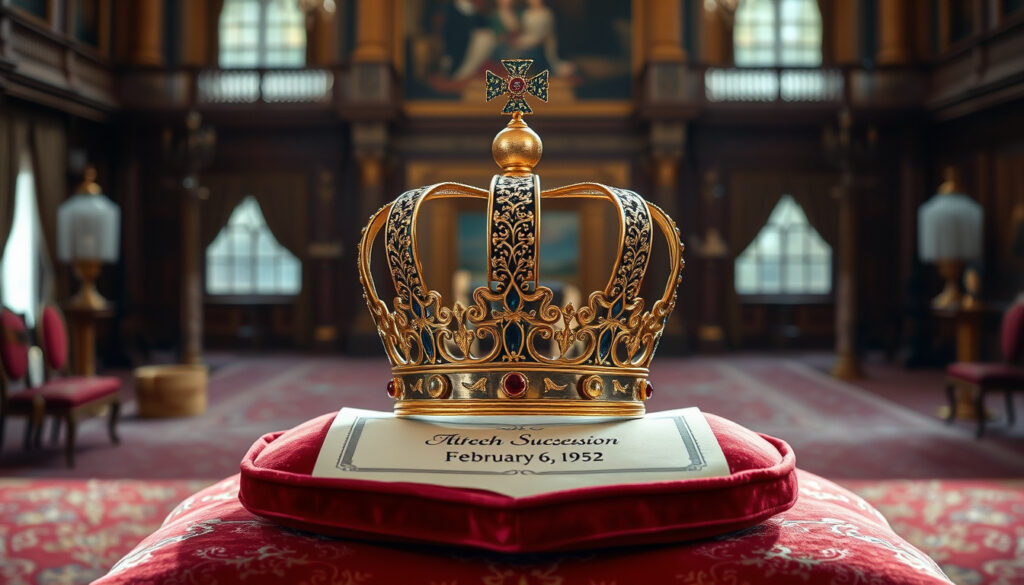
When Did Queen Elizabeth II Become Queen – Date, Age and Location
Queen Elizabeth II became queen on 6 February 1952, following the death of her father King George VI. At the time, she was just 25 years old and halfway around the world, visiting Kenya on an official tour. Her accession marked the beginning of what would become the longest reign in British history, spanning more than seven decades until her death in September 2022.
The transition of the British throne occurred swiftly and with minimal disruption, thanks to carefully prepared protocols that had been in place for years. Unlike the abdication crisis of 1936, when her uncle Edward VIII renounced the crown, the succession in 1952 proceeded smoothly according to established constitutional conventions. Elizabeth’s preparation for this moment had begun in childhood, particularly after her father’s unexpected accession in 1936.
When Did Queen Elizabeth II Become Queen?
Queen Elizabeth II ascended to the throne on 6 February 1952, the same day her father King George VI died at the age of 56. The death occurred in the early morning hours at Sandringham House, while his daughter was thousands of miles away in Kenya. This timing is significant because it illustrates how the constitutional mechanism of succession operates independently of the monarch’s personal circumstances or location.
Exact Date of Accession
The formal date of accession was 6 February 1952, a fact confirmed across multiple official records including the London Gazette and contemporary news reports. This date marks the precise moment when Elizabeth became sovereign, regardless of when the news reached her or when formal ceremonies took place.
Proclamation as Queen
The Accession Council convened twice at St James’s Palace to formalize the transition. The first meeting occurred on 6 February at 5 p.m., before Elizabeth had returned from Kenya. The second meeting took place on 8 February at 10 a.m., when the Queen was present to receive her oath. Following this formal ceremony, the proclamation was read publicly by the Garter King of Arms, Sir George Bellew, from the Friary Court balcony, then in Trafalgar Square, Fleet Street, and finally at the Royal Exchange.
Commonwealth realms announced the accession on different dates: Australia proclaimed her queen on 7 February from Parliament House steps, South Africa did so the same day in both English and Afrikaans, Pakistan on 8 February with a 21-gun salute, and New Zealand on 11 February. These variations reflected the geographic distances and independent communication channels of the Commonwealth.
How Did Queen Elizabeth II Become Queen?
Elizabeth’s path to the throne was determined by the principles of primogeniture and proximity to the crown, which together form the backbone of British succession law. When her grandfather George V died in 1936, her uncle Edward VIII became king. His subsequent abdication that same year fundamentally altered Elizabeth’s position in the line of succession, making her father Albert the rightful heir and placing her directly in line for the throne.
Death of King George VI
King George VI died on 6 February 1952 at his Sandringham estate, succumbing to the health complications that had plagued him since his coronation. The king’s struggle with anxiety and smoking-related illness had been a matter of public record for years, yet his death at 56 still came as a significant shock to the nation still recovering from World War II. His passing marked the end of a reign that had symbolized British resilience during the nation’s darkest modern hours.
Line of Succession
At the time of her accession, Elizabeth stood first in the line of succession as the eldest child of the late king. Her position had been secured since 1936, when the abdication crisis had made her father king and her the heir presumptive. Constitutional experts note that her position was both a product of circumstance and of the clear rules governing the royal family. The Westminster Abbey records confirm the straightforward application of succession law to her case.
Where Was Queen Elizabeth II When She Learned She Was Queen?
Queen Elizabeth II was staying at Treetops Hotel in Kenya when she received news of her father’s death. This location carries symbolic significance, as it was the very place where she had been watching wildlife just hours before. The abrupt transition from tourist to monarch occurred in one of the most remote settings imaginable, far from the centers of British political power and royal administration.
Location and Immediate Response
The news reached Elizabeth through official channels, and she immediately made arrangements to return to the United Kingdom. Her husband, Prince Philip, accompanied her throughout the journey home. The brevity of her African tour, cut short by the tragic news, highlighted the demanding nature of royal responsibilities and the absolute priority given to matters of state. According to reports from the Science and Media Museum, planning for the return began almost immediately after the confirmation of the king’s death.
Return to London
The Queen returned to British soil on 7 February 1952, the day after her father’s death. She arrived at London Airport, now known as Heathrow, where she was met by Prime Minister Winston Churchill and other senior officials. This meeting marked the formal beginning of her reign in practical terms, as she received the condolences of the nation’s political leadership. The contrast between her arrival as a grieving daughter and her new role as sovereign defined the emotional tone of those first days.
Intercontinental travel in the early 1950s still relied primarily on propeller aircraft, making the journey from Kenya to London a considerable undertaking. The Queen’s return journey demonstrated the increasing importance of air travel for royal duties and the need for monarchs to maintain global mobility.
How Old Was Queen Elizabeth II When She Became Queen?
Queen Elizabeth II was 25 years old when she ascended to the throne, making her one of the youngest monarchs to take the crown in British history. Her youth stood in sharp contrast to the gravity of her new position, which required immediate command of complex constitutional responsibilities and an intimate understanding of global affairs. Despite her relative inexperience in governmental matters, her upbringing had provided extensive preparation for leadership.
Age at Accession
Born on 21 April 1926, Elizabeth was in her twenty-sixth year when she formally accepted the crown. Her age generated considerable public interest at the time, with many commentators speculating about how a young woman could assume such profound responsibilities. Her formal education, though limited by the standards of later generations, had included instruction in constitutional history, languages, and the duties of sovereignty. You can read more about this transition in the McMunn and Yates Kenora Case Timeline for context on historical events from this period.
Length of Reign Overview
Elizabeth’s reign ultimately spanned 70 years and 214 days, longer than any other British monarch in history. She surpassed Queen Victoria’s record of 63 years in 2015 and continued serving until her death on 8 September 2022 at Balmoral Castle in Scotland, aged 96. Her Platinum Jubilee in 2022 celebrated this extraordinary milestone, drawing attention to the unprecedented stability she provided as head of state through decades of immense social and political change. Pots trobar més informació sobre la talla de sabates per a nens aquí talla de sabates per a nens.
Key Dates in Queen Elizabeth II’s Ascension and Reign
- – Birth of Princess Elizabeth Alexandra Mary at Grosvenor House, London
- – Abdication of Edward VIII; father becomes King George VI
- – Death of George VI; Elizabeth becomes queen
- – Formal meeting of Accession Council; public proclamation
- – Coronation ceremony at Westminster Abbey
- – Silver Jubilee celebration
- – Becomes longest-reigning British monarch
- – Death at Balmoral Castle, age 96
The distinction between accession and coronation is fundamental to understanding the British monarchy. Accession refers to the moment a sovereign takes the throne, which occurs automatically upon the death or abdication of the previous monarch. The coronation is a ceremonial occasion, often held months later, that formally crowns the new monarch and often involves religious rites and public celebration.
Clarifying Common Misconceptions
| Established Information | Common Misconceptions |
|---|---|
| Accession occurred on 6 February 1952 upon George VI’s death | The coronation date (2 June 1953) is sometimes confused with accession |
| She was in Kenya when she became queen | Some incorrectly assume she was in London or at Balmoral |
| She was 25 years old at accession | Her reign length (70+ years) sometimes causes confusion about her starting age |
| The Accession Council met twice: 6 and 8 February | All proclamation activities occurred after her accession, not before |
The Historical Context of the Succession
The succession of Elizabeth II occurred during a period of significant transformation in the British Empire and Commonwealth. In 1952, Britain was still in the early stages of decolonization, with many territories holding their own status within the Commonwealth. The new queen would oversee an institution that would need to adapt dramatically to changing social attitudes, shrinking imperial holdings, and evolving concepts of monarchy.
Her father’s reign had been defined by World War II and its aftermath, establishing the monarchy as a symbol of national perseverance. Elizabeth inherited this symbolic role at a time when the British economy was still recovering from wartime devastation and the nation was adjusting to its reduced position in global affairs. The Pacers vs Knicks Timeline offers an interesting comparison of how different institutions track their histories across decades.
Sources and Official Records
The official proclamation published in the London Gazette on 6 February 1952 formally declared the accession of Elizabeth Alexandrina Windsor to the thrones of the United Kingdom and her other realms and territories.
— London Gazette, 6 February 1952
The primary sources documenting Elizabeth’s accession include the records of the Accession Council preserved in the Royal Archives, the official proceedings published in Hansard, and contemporary newspaper accounts from major publications including The Times and The Daily Telegraph. The Wikipedia article on the proclamation of accession provides detailed citations to these primary materials.
Summary
Queen Elizabeth II became queen on 6 February 1952, at the age of 25, following the death of her father King George VI. She was in Kenya when the news reached her, and she returned immediately to the United Kingdom to assume her new responsibilities. The formal proclamation occurred on 8 February, with ceremonies held across the Commonwealth in the days that followed. Her reign would last for more than 70 years, transforming the monarchy into a modern institution while maintaining its ceremonial and symbolic importance. The circumstances of her accession—occurring thousands of miles from home—reflect both the global reach of the British Crown and the unpredictable nature of royal succession.
Frequently Asked Questions
When was Queen Elizabeth II’s coronation?
Queen Elizabeth II’s coronation took place on 2 June 1953 at Westminster Abbey in London, more than a year after her accession.
How long did Queen Elizabeth II reign?
Queen Elizabeth II reigned for 70 years and 214 days, from 6 February 1952 until her death on 8 September 2022.
Who was the king before Queen Elizabeth II?
King George VI was the monarch before Elizabeth II. He reigned from 1936 until his death in 1952.
Was Queen Elizabeth II the longest-reigning monarch?
Yes, she became the longest-reigning British monarch in 2015 and the world’s longest-reigning sovereign, surpassing Queen Victoria’s previous record.
Where did Queen Elizabeth II die?
Queen Elizabeth II died at Balmoral Castle in Scotland on 8 September 2022, at the age of 96.
More related posts
 Easter Crafts for Kids: Easy Ideas for School & Home
 Nepal vs West Indies Cricket Match Scorecard – T20 Results
 Rick Tocchet: Allegations, Stanley Cups & Coaching Career
 James Taylor Biography: Addiction, Love, and Music
 Walmart Fleur de Lys – Home Decor Guide and Prices
 Evander Kane: Controversies, Debt, and NHL Career Explained
 Half and Half Cream – Definition Nutrition Uses Substitutes
 Where the Crawdads Sing: True Story, Film, & Ending