The Secret Language of Birthdays: Personology Insights
Gary Goldschneider spent decades documenting a striking phenomenon: people born the same day often share recognizable personality traits. His book The Secret Language of Birthdays blends astrology, numerology, and plain old pattern-watching across more than 14,000 people (San Francisco Public Library) to argue that your birthdate carries real personality weight. Published originally in 1994 and still in print with a 2013 Penguin Random House edition, the book offers daily profiles for all 366 days of the year. Here’s what it claims to reveal—and where the science (sort of) ends.
Author: Gary Goldschneider · Core Methods: Astrology, numerology, psychic intuition · Coverage: 366 birthdays · Key Focus: Personality strengths, weaknesses, compatibility · Formats Available: Hardcover, Kindle, app
Quick snapshot
- 366 personality profiles based on astrology, numerology, and tarot (Goodreads)
- Originally published in 1994; reissued 2013 with 832 pages (Penguin Random House)
- Co-author Joost Elffers also produced The 48 Laws of Power (Penguin Random House)
- Whether specific “luckiest” birthdays have empirical backing or are interpretive
- Whether universal luckiest dates exist across cultures
- What exact accuracy metrics would even measure personality-prediction success
- 1994: First hardcover edition released (Penguin Random House)
- 2013: Penguin Random House reissue (832 pages, October 31, 2013) (Penguin Random House)
- Circa 2007: Book reportedly crosses one million copies sold (Sacred Crystals)
- SLN online tool (sln.me) expands digital access to birthday profiles
- Relationship compatibility lookup feature added to digital platform
- YouTube creators continue publishing day-specific readings from the book
The table below consolidates verified attributes for quick reference.
| Attribute | Details |
|---|---|
| Creator | Gary Goldschneider |
| Methodology | Personology (Astrology, Numerology, Intuition) |
| Unique Feature | Daily Birthday Profiles (366) |
| Reveals | Strengths, Weaknesses, Compatibility |
| People Observed | More than 14,000 (San Francisco Public Library) |
| Core Principle | All life is cyclical; same-day births share traits (Goodreads) |
What is The Secret Language of Birthdays About?
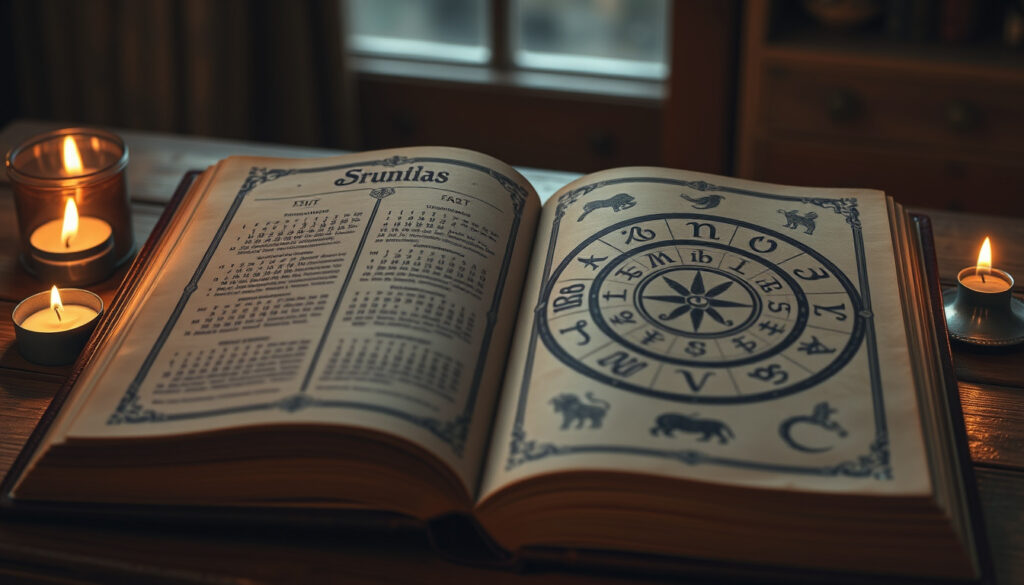
The Secret Language of Birthdays is a reference book containing 366 personality profiles—one for every day of the year, including leap year. Each entry spans two pages with text, icons, and illustrations representing that day’s character (AbeBooks). Sidebars list famous people born on that date, adding a biographical layer to each profile.
Gary Goldschneider and Personology
Goldschneider developed what he calls “personology”—a framework proposing that all life operates in cycles and that people born on the same calendar day occupy the same point in the year’s cycle. According to his theory, those shared positions produce recognizable personality patterns (Goodreads). He based these ideas on decades of observation, reportedly studying more than 14,000 individuals including both contemporary and historical figures (San Francisco Public Library). Co-author Joost Elffers handled production and packaging design, bringing a visual identity that helped the book stand out on shelves (Penguin Random House). Elffers has also produced other bestsellers including Robert Greene’s The 48 Laws of Power and The Art of Seduction (Penguin Random House).
Astrology, Numerology, and Intuition Blend
The profiles draw from three primary sources: astrology (sun sign characteristics), numerology (the symbolic meaning of numbers), and what Goldschneider describes as “pure psychic intuition” (Stevens Magic). Personology specifically combines influences from sun sign, season, and the specific day of the year in ways that go beyond traditional zodiac readings (AbeBooks). For example, May 31 falls in the Gemini I period, is associated with the number 4, the planet Uranus, and the Tarot card The Emperor (YouTube – Secret Language of Birthdays May 31 Birthday Reading).
The three-method approach means no two birthday profiles read exactly alike—Goldschneider claims the synthesis captures nuances that single-system astrology cannot.
Why is The Secret Language of Birthdays So Accurate?
Whether the book is “accurate” depends heavily on how you define that term. The book itself claims birthdays tend to be “uncannily accurate predictors of psychological tendencies” (San Francisco Public Library), though this assertion lives in the book’s own promotional language rather than independent verification.
Basis in Personology
The accuracy argument rests on Goldschneider’s observational data: studying more than 14,000 people over many years to identify recurring patterns (San Francisco Public Library). Personology’s core claim—that people born on the same day share recognizable characteristics—draws on a kind of pattern-matching that resembles neither controlled scientific study nor purely speculative guesswork. It’s somewhere in between: systematic observation without rigorous experimental design (Goodreads).
Critics argue that Barnum statements—vague descriptions applying broadly—explain much of the apparent accuracy readers experience. When a description feels personal, people credit the system rather than the vagueness.
User Experiences and Validation
Many readers report recognizing themselves (or close acquaintances) in their birthday profiles. Astrologers have long suspected that the day of birth affects personality, and Goldschneider’s system builds on that cultural assumption (Goodreads). The book has reportedly sold over one million copies since 1994, suggesting sustained reader engagement (Sacred Crystals). However, peer-reviewed scientific validation of personology’s specific claims remains absent—critics note that Barnum statements (vague personality descriptions that apply broadly) can explain much of the apparent “accuracy” experienced by readers.
The catch: Barnum effects are powerful. When a description feels personal, people tend to credit the system rather than the vagueness. Goldschneider’s detailed profiles may feel precise because they offer specifics—but those specifics often hold true for large swaths of the population.
What Does The Secret Language of Birthdays Reveal?
Each profile claims to reveal strengths, weaknesses, major concerns, practical advice, and spiritual guidance for that birthday (Stevens Magic). The book goes beyond horoscope-level description by assigning specific traits, relationship tendencies, career affinities, and health considerations.
Personality Strengths and Weaknesses
The profiles cover a range of psychological dimensions: emotional tendencies, social behaviors, professional inclinations, and even physical health patterns associated with each day. Each two-page spread uses icons and visual elements to communicate traits at a glance, alongside prose that interprets those traits in context (AbeBooks).
Compatibility and Advice
The book includes guidance on relationships—how different birthdays might interact, clash, or complement each other. The SLN online tool (sln.me) extends this with a relationship lookup feature that shows relationship traits between any two people based on their birthdays (Secret Language of Birthdays Official Site). With a full birthdate, users can access up to 18 personality traits; with just month and day, they can still view up to 12 (Secret Language of Birthdays Official Site).
“Personology shows that each day has its own unique signature—a combination of planetary influences, numerological vibrations, and life cycle patterns that shape who you are.”
— Gary Goldschneider’s introduction framing, as described by book listings
“The 4 Birth Dates That Naturally Attract Luck.”
— Parade magazine’s astrology feature
What is the Luckiest Birthday Date?
The concept of “luckiest birthdays” in personology relates to specific days believed to carry particularly favorable astrological or numerological configurations. Different sources identify different dates depending on the framework applied.
Dates Attracting Luck Per Sources
Parade magazine has identified “4 Birth Dates That Naturally Attract Luck,” though the specific dates and their sources vary. Some astrology traditions link luck to specific planetary alignments (Jupiter in Sagittarius, for instance, is often cited for its expansive energy). The personology system assigns luck-potential differently: each day carries a unique energy that may align better with certain life outcomes for some people than others.
Astrology-Linked Patterns
According to various astrology interpretations, certain months tend to cluster “luckier” birthdays. Spring and early summer births (Aries through Cancer) are sometimes associated with optimistic, outgoing traits that create social luck—opportunities that arise through connections rather than pure chance. Vice has explored how birth months correlate with perceived fortune across different populations.
The implication: luck in personology isn’t random—it reflects specific energetic configurations that certain birthdays naturally inhabit. Whether you believe this depends largely on your stance toward astrology as a predictive system.
“Luckiest” birthdays are interpretive claims within astrological frameworks, not independently verified facts. Goldschneider’s system assigns unique energies to all 366 days rather than singling out winners—but the concept of “luck” itself resists measurement.
What is the Rarest Birth Date to Have?
Leap Day (February 29) is the obvious rarity—it occurs only once every four years, meaning true Leap Day babies (called “leaplings”) technically have fewer “official” birthdays. But birthdate rarity varies for other reasons too.
Top Rarest Birthdays
Statistically, certain dates see fewer births than others. Holiday periods (particularly around Christmas and New Year’s) show dips in scheduled deliveries as hospitals and parents prefer to avoid holiday births when possible. February 29 is genuinely rare by calendar design. April 1 sometimes shows lower rates due to strategic C-section scheduling avoiding April Fool’s Day.
Common vs. Rare Patterns
Birthday distribution isn’t uniform. Mid-September tends to cluster high birth counts—possibly linked to conceptions around the winter holidays when people have more downtime. The CDC and SSA track actual birthdate distributions, revealing that September 9 and September 19 consistently rank among common birthdays, while December 24-26 and February 29 rank rarest (Happiest Baby).
The pattern: weekdays see fewer births than weekends (C-sections and induced labor cluster on weekdays). If you’re born on a weekend, you’ve edged into rarer territory statistically—though not by personal choice.
Upsides
- 366 detailed profiles cover every day including leap year (AbeBooks)
- Combines three systems (astrology, numerology, tarot) for layered insights
- Includes famous-people sidebars for each date
- Sold over one million copies—perennial bestseller status
- Digital tool (sln.me) offers relationship compatibility lookup
- Observational basis in 14,000+ real people
Downsides
- No peer-reviewed scientific validation exists for personology claims
- “Luckiest dates” are interpretive, not empirically proven
- Barnum-effect risk: vague descriptions feel personally accurate
- Original 1994 data hasn’t been updated with new observations
- Digital access requires creating an account on sln.me
- $45 price point for hardcover (2013 edition) is steep for reference material
Related reading: Lee Jong-suk Age, Height, Dramas, IU and Military Update · When Did Queen Elizabeth II Become Queen – Date, Age and Location
Goldschneider’s seminal work has inspired detailed companions like this personology profiles guide, which expands on daily personality traits and compatibilities.
Frequently asked questions
Who is Gary Goldschneider?
Gary Goldschneider is an author and researcher who developed the personology theory after studying more than 14,000 people over many years. He combined astrology, numerology, and what he describes as psychic intuition to create personality profiles for all 366 days of the year. He co-authored The Secret Language of Birthdays with Joost Elffers, published originally in 1994.
What is personology?
Personology is Goldschneider’s framework proposing that all life operates in cycles and that people born on the same calendar day share recognizable personality characteristics because they occupy the same point in the year’s cycle. It blends sun sign astrology, numerological numbers, and intuitive pattern recognition.
Is The Secret Language of Birthdays based on zodiac signs?
Yes, but it goes beyond traditional zodiac. While each profile corresponds to a zodiac sign (determined by date), personology also incorporates numerological values, tarot associations, and day-specific observations that traditional astrology doesn’t include. It essentially layers multiple systems to create a more detailed daily profile.
Does it cover compatibility between birthdays?
Yes. Both the book and the online SLN tool (sln.me) include relationship compatibility analysis. Entering two birthdays generates relationship-trait information showing how those two profiles might interact. The book itself discusses how different day-energies interact in work, friendship, and romantic contexts.
Are there free resources for Secret Language of Birthdays?
The official sln.me website offers limited free access—you can view 12 traits with month-and-day-only input, and 18 traits with a full birthdate. Some YouTube creators publish free birthday readings based on the book’s profiles. The Internet Archive may have older editions available for free digital borrowing. Used copies of the original hardcover sometimes appear at lower prices than the current edition.
How does numerology factor into birthday profiles?
Each birthday profile assigns a numerological number (ranging from 1 to 9, plus master numbers 11, 22, 33) that carries symbolic meaning in the personology system. This number works alongside the zodiac sign and tarot card to add another layer of interpretation to the personality description. For example, May 31 is associated with the number 4, which in numerology often relates to stability, structure, and practicality.
What are birthday cusps?
In personology, cusps refer to the transitional days between different seasonal or numerical periods. These are days that may blend characteristics of two adjacent profiles—Goldschneider’s system acknowledges that some birthdays sit at energetic crossroads. The book includes “cusp profiles” for these transitional days, offering both sets of influences as context for understanding those birthdays.
Is there a mobile app for daily profiles?
The primary digital offering is the SLN website (sln.me), which works on mobile browsers. As of this writing, a dedicated mobile app hasn’t been widely released, though the website is optimized for smartphone access. The relationship lookup and personality trait features are accessible through the web interface on mobile devices.
More related posts
 Air Canada Strike Continues: Updates on Flights, Cancellations
 Avis de Décès Mont-Laurier – How to Find Local Obituaries
 Matt Damon: Marriage, Friendships, Net Worth
 Nick Kypreos: Career, Concussion, and Life After Hockey
 Wiz Khalifa: Biography, Family, Net Worth, and Career Facts (2025)
 Arsenio Hall: Career, Cancellation, and What He’s Doing Now
 Emma Raducanu: Relationship, Heritage, Net Worth, and More
 Queen Latifah: Biography, Son Rebel, Net Worth, and More