Bashar al-Assad: Fall, Exile in Moscow, and What Happened Next
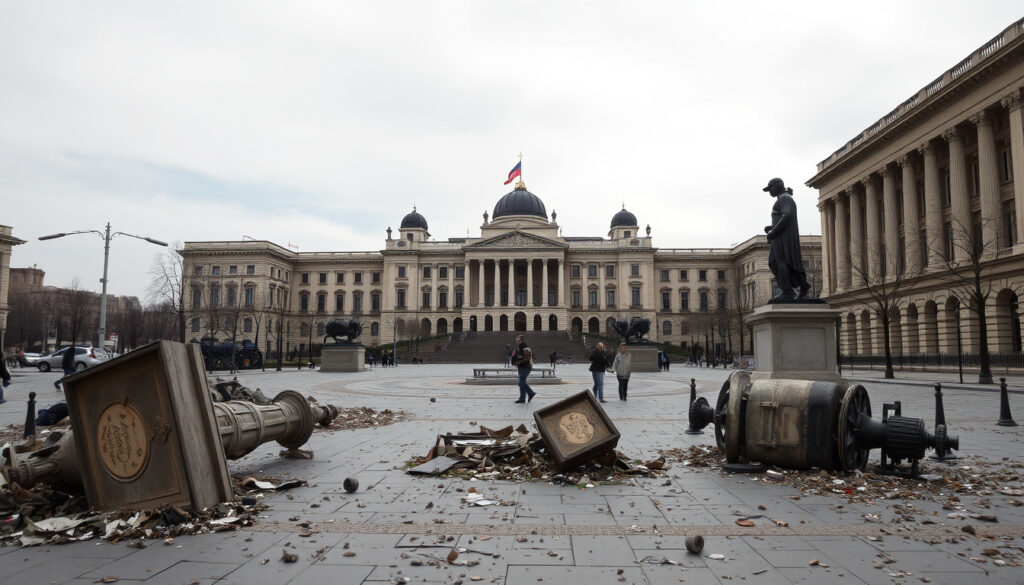
For 53 years, the Assad family ruled Syria with an iron grip. Then, in a matter of days in early December 2024, it all collapsed as Bashar al-Assad fled to Moscow after rebel forces swept into Damascus on December 8.
Born: 11 September 1965 ·
Presidency: 2000–2024 ·
Current status: Exiled in Moscow ·
Regime duration: 53 years (with father) ·
Overthrow date: 8 December 2024 ·
Reported location: Moscow, Russia
Quick snapshot
- Assad regime overthrown on 8 December 2024 (Reuters (international news agency))
- Assad and family fled to Moscow (AP News (US wire service))
- Russia granted asylum (Al Jazeera (Qatar-based news network))
- Exact location within Moscow
- Long-term Russian support
- Future of Syria after Assad
- Assad’s long-term health status
- Whether Assad will face any legal proceedings
- 11-day rebel offensive ended decades of rule (Reuters (international news agency))
- Assad left Damascus on 8 Dec 2024 (Reuters (international news agency))
- Rebel-led transitional authority forming (Reuters (international news agency))
- Syria faces reconstruction needs (Reuters (international news agency))
- International aid required (Reuters (international news agency))
Eight biographical facts about Bashar al-Assad, drawn from institutional sources, outline the man at the centre of the collapse.
| Full name | Bashar Hafez al-Assad Wikipedia (crowdsourced encyclopedia) |
| Date of birth | 11 September 1965 |
| Place of birth | Damascus, Syria |
| Religion | Alawite (Shia Islam) |
| Spouse | Asma al-Assad (m. 2000) |
| Number of children | 3 |
| Height | 1.89 m (6 ft 2 in) |
| Presidency | 17 July 2000 – 8 December 2024 Reuters (international news agency) |
What has happened to Bashar al-Assad?
The fall of Damascus
- On 8 December 2024, Syrian opposition forces captured Damascus, and the Assad government collapsed (Reuters (international news agency)).
- The offensive began just 11 days earlier, with rebels sweeping through major cities (Al Jazeera (Qatar-based news network)).
Flight to Moscow
- Reports on 8 December said Assad fled to Russia (AP News (US wire service)).
- Russian news agencies confirmed that Assad and his family arrived in Moscow and had been granted asylum.
- Russia said Assad left Syria after giving orders for a peaceful transfer of power (Reuters (international news agency)).
The implication: a half-century dynasty ended not with a negotiated transition but with a sudden evacuation, leaving the country in rebel hands and the former president dependent on Moscow.
Why did Assad fall so quickly?
Military collapse
- Rebel forces captured major cities in rapid succession, reaching Damascus within days (Reuters (international news agency)).
- Government forces offered little resistance in many areas, leading to a swift collapse (Al Jazeera (Qatar-based news network)).
Loss of key allies
- Russian and Iranian support waned, with Russian forces focused on Ukraine and Iran facing internal pressures.
- Assad’s allies reportedly lost military momentum, allowing rebels to advance rapidly (Reuters (international news agency)).
The speed of the regime’s collapse surprised most analysts. Without reliable foreign backup and with an exhausted army, Assad’s government crumbled in less than two weeks – exposing the fragility of a regime that had appeared entrenched for years.
The pattern: a dictator who relied on loyalist forces and foreign patrons saw both pillars fail simultaneously, turning a long war into a sudden rout.
Where is Assad now?
Moscow residence
- Assad is reported to be living in Moscow luxury homes under strict Russian supervision (Euronews (European news network)).
- Russian sources say his public appearances are banned and movement is limited.
- The exact location has not been publicly confirmed (AP News (US wire service)).
Family location
- His wife Asma and their three children are with him in Moscow.
- Reports suggest the family is staying in a luxury compound (Euronews (European news network)).
What this means: Assad is effectively a protected guest of the Kremlin – safe from prosecution but isolated, with his future tied to Russian geopolitical interests.
What happened to Assad’s wife?
Asma al-Assad’s status
- Asma al-Assad fled to Russia alongside her husband.
- She had been a high-profile figure during the regime, often described as “the rose of the desert” by loyalists.
Health and legal issues
- Asma has reportedly suffered from health problems, including breast cancer, which she announced in 2019.
- She faces international sanctions and legal scrutiny for alleged corruption (Euronews (European news network)).
While Asma remains physically safe in Moscow, her status as a sanctioned individual means she cannot travel freely to Western countries. Her health is also an ongoing concern, adding a personal dimension to the family’s exile.
The trade-off: Asma exchanged a life of luxury in Damascus palaces for supervised exile in Russia, with uncertain medical access and a tarnished reputation.
Is Syria doing better after Assad?
Post-regime challenges
- The country faces enormous reconstruction needs after nearly 14 years of civil war.
- A security vacuum has been reported in some areas, with various armed groups vying for control (Reuters (international news agency)).
Humanitarian situation
- International aid organisations warn of ongoing humanitarian crises, including displacement and food insecurity.
- The rebel-led Salvation Government has begun transferring authority, but stability remains fragile (Reuters (international news agency)).
Why this matters: The fall of the Assad regime removed a brutal dictator, but it did not automatically bring peace. Syria’s future depends on the ability of new leadership to unify the country and secure international support.
Timeline signal
Key dates in the rise, rule, and sudden fall of Bashar al-Assad.
- 11 September 1965 – Born in Damascus (Wikipedia (crowdsourced encyclopedia))
- 2000 – Became president after father Hafez al-Assad’s death
- 2011 – Syrian civil war begins (Wikipedia (crowdsourced encyclopedia))
- 8 December 2024 – Regime overthrown; Assad flees to Moscow (Reuters (international news agency))
- Early December 2024 – Assad family reported in Moscow luxury compound (Euronews (European news network))
What we know and what remains unclear
Confirmed facts
- Assad regime overthrown on 8 December 2024 (Reuters)
- Assad fled Damascus (Reuters)
- Russia granted asylum (AP News)
- Family joined him in Moscow
What’s unclear
- Exact location within Moscow
- Long-term Russian support
- Future of Syria after Assad
- Assad’s long-term health status
- Whether Assad will face any legal proceedings
Voices from the ground
Assad said his departure was not planned and that he left Damascus to manage combat operations from Hmeimim Air Base in Latakia on 8 December 2024.
Reuters (international news agency), citing Assad’s first public statement after ouster (Reuters video statement)
Russian news agencies, citing an anonymous Kremlin source, said Assad had reached Moscow and was granted asylum.
AP News (US wire service), reporting Russian state media accounts (AP News (US wire service))
The fall of Bashar al-Assad closed a brutal chapter in Syrian history, but the country’s future hangs in the balance. For the millions of Syrians who lived through war and displacement, the choice is clear: either the international community steps up with reconstruction aid, or the security vacuum invites new conflict. The exiled former president, meanwhile, remains a pawn in Russia’s geopolitical game – safe but powerless, a living symbol of a regime that lost everything in a matter of days.
Related reading: Roy Cohn: Biography, Trump Mentor, Death, and Legacy · Dave Smith Biography, Religion, and Political Views
facebook.com, reuters.com, reuters.com, euronews.com, youtube.com, arabnews.jp, en.wikipedia.org
For a more detailed account of the collapse, including a day-by-day timeline of rebel advances, see detailed account of the collapse.
Frequently asked questions
Who is Bashar al-Assad?
Bashar al-Assad is the former president of Syria, who ruled from 2000 to December 2024. He is an Alawite and succeeded his father Hafez al-Assad.
How long was Assad in power?
He served as president for 24 years (2000–2024). Combined with his father’s 29-year rule, the Assad family held power for 53 years.
What led to the fall of the Assad regime?
A rapid 11-day rebel offensive in December 2024 captured key cities, culminating in the seizure of Damascus. Loss of support from key allies Russia and Iran, along with military exhaustion, caused the regime to crumble.
Is Assad alive?
Yes. He is reported to be living in Moscow under Russian protection.
Will Assad ever return to Syria?
It is highly unlikely. He faces war crimes allegations and the new rebel-led government has no intention of allowing his return. Moscow may keep him as a bargaining chip.
What is the Alawite sect?
Alawites are a branch of Shia Islam. Assad’s Alawite background allowed him to control a minority-led regime with loyalist army and security forces.
Who are the main rebel groups that overthrew Assad?
The leading coalition was the Salvation Government, spearheaded by Hayat Tahrir al-Sham (HTS), along with other opposition factions. They coordinated a lightning offensive in late 2024.
More related posts
 Carl Weathers Cause of Death and Tributes From Co-Stars
 Bobby Fischer: Chess Champion, Accused Fugitive, and Genius
 Mumbai Indians vs Delhi Capitals Match Scorecard – Full Stats and Key Insights
 Mao Zedong: Competing Narratives of China’s Founder
 Brandon Sklenar Movies and TV Shows: Full Career Guide
 Keith Morrison: Biography, Career, and Matthew Perry Connection
 Best Indian Restaurant Toronto: Michelin, Reddit & Top Picks