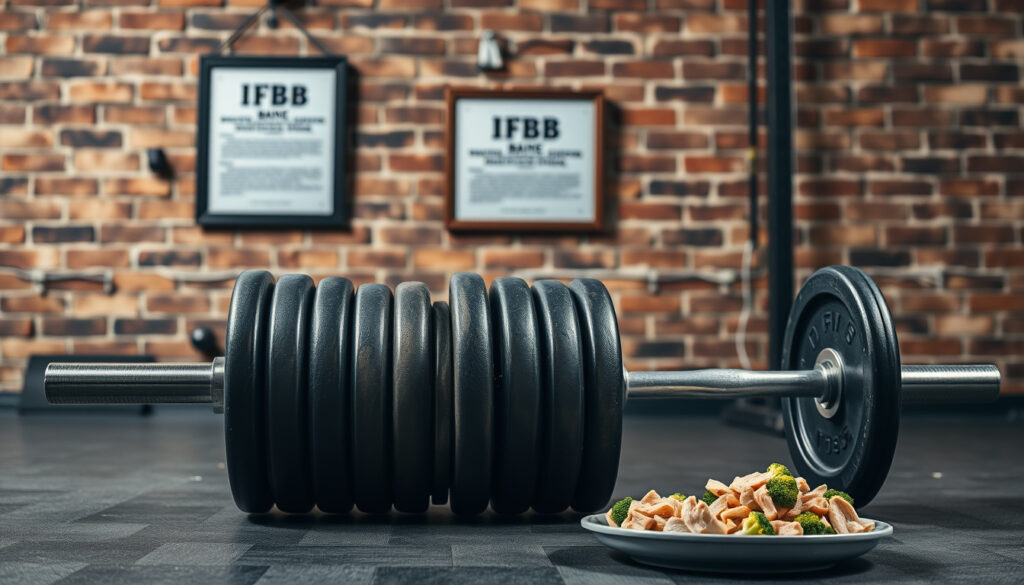
Lee Priest: Career, IFBB Ban, Face Tattoo, and Diet
Lee Priest, the 5’4″ Australian known as the “Giant Killer,” didn’t just bodybuild — he openly defied a federation that handed him a lifetime ban, tattooed his face for shock value, and called out the sport’s biggest hypocrites about steroid use. This article separates the verified facts from the gym folklore around his career, his suspension, his face tattoo, and the legendary diet that made him a cult figure.
Height: 5 ft 4 in (163 cm) ·
Contest Weight: 225 lb (102 kg) ·
Born: July 6, 1972 ·
Nationality: Australian ·
IFBB Pro Year: 1990
Quick snapshot
- Lee Priest turned pro in 1990 at age 18 (Wikipedia)
- His best Mr. Olympia finish was 6th place (2000, 2001) (Wikipedia)
- He received a lifetime IFBB ban in 2003 (Wikipedia)
- He has openly admitted to anabolic steroid use (Fitness Volt)
- Exact cost of tattoo removal ($200,000 not independently verified) (ThinkSteroids)
- Precise number of eggs eaten daily (140 may be anecdotal) (Fitness Volt)
- Meaning of three-dot tattoo (gang affiliation denied) (ThinkSteroids)
- 1972: Born in Newcastle, Australia
- 1985: Wins Mr. Australia at 13
- 1990: Turns IFBB pro
- 2003: Receives lifetime IFBB ban
- 2008: Gets face tattoos
- Priest continues to train and appear on podcasts from Australia
- He maintains his critique of bodybuilding politics
- No current plans to compete under any federation
Six key facts about Lee Priest, one takeaway: his measurements tell a story of extreme mass on a compact frame — a direct challenge to the idea that height determines success in pro bodybuilding.
| Attribute | Value |
|---|---|
| Height | 5 ft 4 in (163 cm) |
| Contest Weight | 225 lb (102 kg) |
| Off-Season Weight | Up to 260 lb (118 kg) |
| Born | July 6, 1972 (age 52) |
| Nationality | Australian |
| IFBB Pro Since | 1990 |
Why Did Lee Priest Get Kicked Out of the IFBB?
For a federation that rarely issues lifetime bans, the IFBB’s treatment of Lee Priest became one of the sport’s longest-running subplots. The official reason: he competed in shows promoted by Wayne DeMilia’s Pro Division Inc. — the Night of Champions and Night of Champions Britain — without authorization. That earned him a one-year suspension in 2001 for failing to disclose earnings and refusing to pay a fine, according to Wikipedia’s biography of Priest.
The IFBB Ban: Official Reason vs. Controversy
- The one-year suspension escalated to a lifetime ban in 2003 after an incident at the Night of Champions (Wikipedia)
- Priest has argued the ban was retaliatory for speaking openly about drug use in the sport (Fitness Volt (fitness news outlet))
- The IFBB’s official stance cited unauthorized competition and failure to comply with financial disclosure rules
A 2022 recap of an interview on the Dennis James podcast, published by Fitness Volt, quotes Priest describing the original ban as a one-year suspension that snowballed because he argued the point. He later claimed the IFBB and its related bodies had split, making the ban effectively moot under the new organization.
Priest’s Statements on the Suspension
- “I was suspended for talking. That’s what it was,” Priest told podcast host Dennis James (Fitness Volt)
- He has said the banning authority dissolved into different organizations, meaning he was “technically not suspended anymore”
The catch: Priest’s argument rests on the organizational restructuring of the IFBB and its split with the NPC — a reading that never got tested in a formal reinstatement process.
Consequences and Return to Competition
- Despite the ban, Priest returned to the Olympia stage in 2009 to compete in the 202 class (Wikipedia)
- He placed 2nd in the 202 Mr. Olympia that year
- His competitive career effectively ended after the 2009 season
Did Lee Priest Ever Win Mr. Olympia?
No — and the gap between what he could achieve and what he actually won defines the “what if” of his career. Priest never won the Sandow trophy, and his best finish confirms he was a top-tier competitor who never broke into the absolute elite on Olympia night.
Lee Priest’s Mr. Olympia Appearances and Best Placings
- 1990: Did not compete
- 1997: 13th place (Wikipedia)
- 2000: 6th place — tied for his best finish (Wikipedia)
- 2001: 6th place — tied for his best finish (Wikipedia)
- 2009 (202 class): 2nd place (Wikipedia)
Competing in the Open and 202 Classes
- Priest competed in the Open division from 1997 to 2001
- After the IFBB ban, he returned in 2009 for the 202 class (under 202 lb)
- He weighed approximately 202 lb for the 2009 202 Olympia (Wikipedia)
How Close Did He Get to the Title?
- His 6th-place finishes in 2000 and 2001 placed him behind Ronnie Coleman, Kevin Levrone, and Shawn Ray — perennial top-5 competitors
- In the 202 class, only Flex Lewis placed ahead of him in 2009
- Priest never podiumed at the Open Olympia
The implication: Priest’s 6th-place ceiling reflects the reality that at 5’4″, he was competing against men with significantly larger muscle bellies and longer frames, despite having proportionally extreme conditioning.
Lee Priest’s Face Tattoo: Meaning, Motivation, and Removal
Few bodybuilders have permanently altered their appearance the way Priest did starting in 2008. His facial ink — a tribal-style pattern across the left side of his face — was not a passing phase, but a calculated statement that cost tens of thousands of dollars to eventually partially reverse.
Why Lee Priest Tattooed His Face
- Priest told interviewers he got the tattoo for “shock value” and to express individuality (ThinkSteroids (bodybuilding profile site))
- He cited Mike Tyson’s facial tattoo as inspiration (ThinkSteroids)
- The design is a large tribal pattern covering much of the left side of his face
The Meaning Behind the Three Dots
- The three-dot tattoo (triangular pattern on his face) drew attention due to its association with prison or gang symbolism
- Priest denied any gang affiliation, stating the three dots represented something personal (ThinkSteroids)
- He has never publicly given a definitive explanation of the three dots’ meaning
Did He Remove the Face Tattoo?
- Priest underwent laser removal treatments for the three-dot portion of the tattoo, reportedly costing up to $200,000 (ThinkSteroids)
- The larger tribal pattern remains
- Priest has said the tattoos are “barely visible” when he is tanned for contest condition (ThinkSteroids)
The trade-off: Priest got a permanent face tattoo for individuality, then spent years and a six-figure sum removing part of it — but he doesn’t regret the ink itself, only the inconvenience it sometimes caused.
How Much Did Lee Priest Weigh at His Biggest?
Priest’s weight fluctuations are one of the most discussed aspects of his career, partly because they highlight how much mass a 5’4″ frame can carry. The numbers are extreme by any standard.
Off-Season vs. Contest Weight
- Contest weight: Approximately 225 lb (102 kg) (Wikipedia)
- Off-season weight (peak): Up to 260 lb (118 kg) (ThinkSteroids)
- Reported extreme off-season: A 2024 profile from ThinkSteroids states his off-season bodyweight once reached about 285 pounds
- Later years: Priest maintained around 240 lb off-season (ThinkSteroids)
The 140 Egg Challenge: Diet and Mass Building
- Priest popularized the claim of eating 140 eggs per day during mass-building phases (Fitness Volt)
- He consumed the eggs raw in a blender for convenience (Fitness Volt)
- The number “140” is often cited as anecdotal, with Priest himself sometimes framing it as an approximate figure
Comparison to Other Bodybuilders
- At 5’4″ and 225 lb contest weight, Priest carried more muscle per inch of height than most Mr. Olympia winners
- To match Priest’s proportion, a 6′ bodybuilder would need to weigh approximately 300-320 lb at comparable conditioning
- His compact frame gave him a visual density advantage that judges sometimes acknowledged as impressive but not enough to overcome height bias
The pattern: Priest’s weight-to-height ratio was among the highest in IFBB history — but the sport’s size bias toward taller frames meant density alone couldn’t push him past 6th at the Olympia.
Was Lee Priest Natty? The Truth About Steroid Use
This question is uncommonly straightforward for Priest — because he answered it. Unlike many bodybuilders who hedge or deny, Priest used his platform to openly discuss performance-enhancing drug use, and in doing so, became both a folk hero and a lightning rod for the “natty or not” debates that dominate fitness social media.
Lee Priest’s Honesty About Steroids
- Priest has openly admitted to using anabolic steroids throughout his competitive career (Fitness Volt)
- He has criticized the hypocrisy of bodybuilders who deny use while clearly being enhanced
- In his 2024 podcast discussions, Priest clarified his current testosterone use as part of ongoing health management (Fitness Volt)
His Critique of the ‘Natty’ Label in Bodybuilding
- Priest has called out several top-tier bodybuilders for claiming natural status while competing at impossible-to-achieve natural levels
- He argues that the “natty” label is a marketing tool, not an honest classification
Evidence from His Career and Statements
- His muscle mass (225 lb at 5’4″) and conditioning are not achievable naturally, according to sports science standards
- Priest’s 285-pound off-season weight at 5’4″ would require significant pharmacological support
- He has described specific steroid cycles in interviews (Fitness Volt)
Lee Priest’s honesty about steroid use cuts through the layer of denial that defines much of the fitness industry. For younger lifters, his example makes one thing clear: if a 5’4″ man carrying 260 pounds in the off-season tells you he isn’t natural, believe him — and question anyone who claims otherwise with similar stats.
Which Bodybuilder Ate 140 Eggs a Day? Lee Priest’s Diet
The 140-egg claim is one of bodybuilding’s most repeated legends, and Priest is its source. But the reality of his diet is more nuanced than the headline suggests.
The Legend of the 140 Eggs
- Priest popularized the number 140 eggs per day during mass-building phases (Fitness Volt)
- He reportedly blended the eggs — yolks included — and drank them as a shake
- The claim has been cited widely but is often treated as anecdotal exaggeration even by Priest himself
Priest’s Daily Diet Breakdown
- Contest prep diet: oatmeal, eggs, chicken, rice, steak, vegetables, fruit, and protein shakes (Fitness Volt)
- Off-season: steak, potatoes, chicken, pasta, dairy, with occasional junk food (The Barbell (fitness publication))
- Priest has said he never counted macros, relying instead on intuitive eating (Fitness Clone (diet and workout site))
- He kept carbs above 250g per day even during contest prep (Fitness Volt)
Nutritional Feasibility and Criticism
- 140 eggs contain approximately 9,000-10,000 calories and 800-900g of protein — a volume that exceeds what the body can absorb in one day
- Health risks include elevated cholesterol, kidney strain, and severe digestive stress
- Priest himself has alternated extreme bulking with periods of only two meals per day (Fitness Volt)
The catch: Priest’s diet philosophy is simple — eat as much as possible to grow, diet seriously for only short periods — but the 140-egg claim serves more as a mythic flourish than a practical recommendation. Even he dieted for only about a week at a time, alternating with McDonald’s during prep, according to his own account on the Dennis James podcast.
“I was suspended for talking. That’s what it was.”
— Lee Priest on his IFBB ban, via Fitness Volt
“I just ate a lot of eggs. It’s not that complicated.”
— Lee Priest on his mass-building diet, via Fitness Volt
“Lee Priest is one of the few guys who actually tells you the truth about what he took.”
— Jay Cutler, four-time Mr. Olympia, commenting on Priest’s honesty (Instagram)
Priest is simultaneously the sport’s most honest voice on steroids and its most outspoken critic of the federation that punished him for that honesty. The IFBB banned him for competition violations, not speech — but the effect was the same: the sport lost one of its most transparent competitors.
Career Timeline
- 1972: Born in Newcastle, Australia (Wikipedia)
- 1985: Wins Mr. Australia at age 13 (Wikipedia)
- 1990: Turns professional in IFBB (Wikipedia)
- 2001: Suspended by IFBB for failure to disclose earnings (Wikipedia)
- 2003: Receives lifetime ban after Night of Champions incident (Wikipedia)
- 2008: Gets face tattoos, including three dots (ThinkSteroids)
- 2009: Places 2nd in 202 Mr. Olympia (Wikipedia)
- 2013: Laser removal of three-dot tattoo reported (ThinkSteroids)
fitnessvolt.com, shumitore.com, youtube.com, fitnessvolt.com, broscience.com, elitefitness.com, essentiallysports.com
Frequently Asked Questions
What is Lee Priest’s training split?
Priest trains each major body part once per week, typically using a five- or six-day split. His routine emphasizes heavy compound lifts like bench press, squats, and rows, with moderate volume and high intensity.
Why is Lee Priest called the Giant Killer?
The nickname comes from his ability to place well against taller, larger bodybuilders. At 5’4″, he consistently outperformed competitors who outweighed and out-sized him, earning respect for his proportionally extreme muscle density.
Did Lee Priest ever win the Arnold Classic?
No. Priest competed in the Arnold Classic but never won the title. His best placing in the Arnold Classic was not among the top three. The contest fields during his era included champions like Ronnie Coleman and Dexter Jackson.
How much did Lee Priest earn in his career?
Priest’s career earnings have not been publicly disclosed in verified statements. Prize money from his Olympia placings and other contests combined likely reached below the top-tier Mr. Olympia winners’ earnings, but exact numbers remain private.
Is Lee Priest still alive?
Yes. Lee Priest is alive as of 2025. He continues to train, make public appearances in Australia, and participate in podcast interviews discussing bodybuilding, diet, and federation politics.
What does Lee Priest do now?
Priest resides in Australia, trains regularly, and occasionally appears on fitness podcasts. He has not competed since 2009 and has no announced plans to return to competition under any federation.
For those who followed his career, the Lee Priest story is a paradox: a bodybuilder who was too honest for the IFBB, too small for the judges, but too dedicated to quit. Priest remains the sport’s most outspoken Australian voice, and his refusal to play politics is both his greatest strength and the reason his competitive career ended early.
More related posts
 Canadian Tire St. Catharines: Hours, Locations & Flyer
 Taron Egerton: Ear Lump, Bike Fall, and Net Worth
 Vanessa Williams: Biography, Scandal, Hit Songs, and Current Life
 AP Dhillon: Biography, Relationships, and Rise to Fame
 40 cm in Inches: Exact Converter and Formula Guide
 Gilles Villeneuve: Crash, Legacy & Why Ferrari Loved Him
 Part Time Jobs Regina: 2025 Guide to Finding Part-Time Work
 Gene Hackman Cause of Death: Heart Disease & Hantavirus