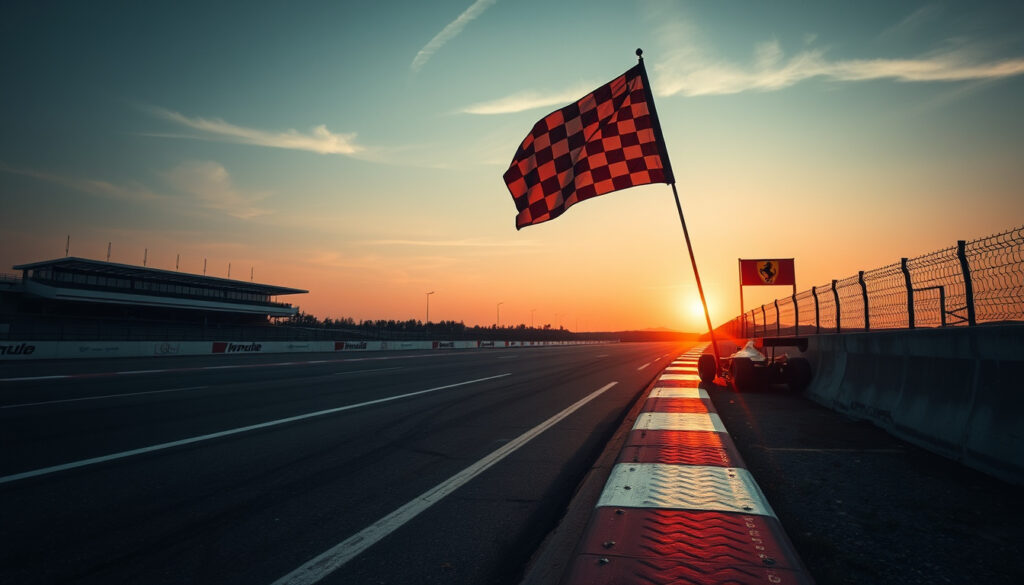
Gilles Villeneuve: Crash, Legacy & Why Ferrari Loved Him
Few drivers in Formula One history have captured the imagination quite like Gilles Villeneuve. The Canadian’s all-or-nothing style made him a fan favorite even though he never won a world championship. Here’s the story of the man Enzo Ferrari called “the fastest driver in the history of motor racing” and whose legacy still burns bright nearly four decades after his death.
Full Name: Gilles Villeneuve ·
Born: 18 January 1950, Chambly, Quebec, Canada ·
Died: 8 May 1982, Leuven, Belgium ·
Nationality: Canadian ·
Formula One Wins: 6 ·
Teams: McLaren (1977), Ferrari (1978–1982)
Quick snapshot
- Why Villeneuve turned into Jochen Mass’s path remains a matter of speculation.
- Whether a slower car on the racing line contributed to the accident is not definitively known.
- If modern safety measures would have prevented the crash cannot be confirmed.
- Whether any team orders or communication issues played a role is not publicly documented.
- Born 18 January 1950 in Quebec, debuted in F1 in 1977 with McLaren, switched to Ferrari in 1978, died 8 May 1982 at Zolder (Wikipedia).
- The Circuit Gilles Villeneuve continues to host the Canadian Grand Prix, ensuring his name lives on in Montreal.
- His son Jacques Villeneuve became the 1997 F1 world champion, cementing the family legacy.
Eleven key facts about Gilles Villeneuve’s life and career paint a portrait of a driver who lived on the edge:
| Attribute | Value |
|---|---|
| Full Name | Gilles Villeneuve |
| Birth | 18 January 1950, Chambly, Quebec, Canada |
| Death | 8 May 1982, Leuven, Belgium |
| Nationality | Canadian |
| Formula One Seasons | 1977–1982 |
| Teams | McLaren, Ferrari |
| Wins | 6 |
| Podiums | 13 |
| Pole Positions | 2 |
| Fastest Laps | 8 |
| Best Championship Finish | 2nd (1979) |
What was Gilles Villeneuve’s cause of death?
Villeneuve died on 8 May 1982 at Leuven University Hospital from injuries sustained in a crash during qualifying for the Belgian Grand Prix at Zolder (Wikipedia). He collided with the March of Jochen Mass after turning to avoid a slower car. The Ferrari 126C2 rolled several times; Villeneuve was thrown from the vehicle and suffered a fatal neck fracture.
How did the crash at Zolder occur?
During the final qualifying session, Villeneuve came up behind a slower car driven by Jochen Mass. As he moved to overtake, Mass also changed his line, and the two cars touched at high speed. Villeneuve’s car was launched into the air, barrel‑rolled, and ejected him from the cockpit. He was airlifted to the hospital but died later that evening (Formula One History).
Was the accident caused by a mechanical failure?
Official reports found no mechanical fault with Villeneuve’s car. The cause was attributed to driver misjudgment, though many observers note the split‑second nature of the decision he made (Wikipedia). The exact reason he turned into Mass’s path remains unclear.
The tragedy highlighted the inherent dangers of that era’s Formula One.
Why is Gilles Villeneuve so famous?
Villeneuve became a global icon despite never winning a Formula One World Championship. His fearless, spectacular driving style pushed cars beyond their limits and earned him the nickname “the fastest driver in the history of motor racing” from Enzo Ferrari himself (Wikipedia).
What made his driving style unique?
Villeneuve drove with total commitment, often sliding the car through corners at angles that seemed impossible. He had extraordinary car control and would extract lap times from machinery that others found undrivable. His 1979 season at Ferrari featured a legendary battle with René Arnoux at Dijon, a duel that remains one of the greatest in F1 history (Formula One History).
Which race victories cemented his legend?
His first win at the 1978 Canadian Grand Prix in front of his home crowd was emotional. The 1979 victory at Watkins Glen, a 1979 win at Monza, and the 1981 Spanish Grand Prix victory (his last) reinforced his reputation as a driver who could win against the odds (Formula One History).
The implication: Villeneuve’s legacy proves that popularity and respect in Formula One do not always require a championship trophy. His raw courage and artistry behind the wheel were enough to make him immortal.
What car was Gilles Villeneuve driving when he died?
At the time of the accident, Villeneuve was driving the Ferrari 126C2, chassis number 066. The 126C2 was Ferrari’s turbocharged V6 car for the 1982 season (Wikipedia).
Which Ferrari model was it?
The 126C2 was the successor to the 126CK, designed to be more competitive after a difficult 1981 season. It featured a 1.5‑liter turbocharged V6 engine and a new carbon‑fiber monocoque, but it was still a handful to drive. Villeneuve had already qualified second with it at Zolder.
What specifications did the car have?
The car produced around 600 horsepower in qualifying trim and weighed roughly 580 kg. Its handling was notoriously twitchy, which suited Villeneuve’s aggressive style but also contributed to the car’s unpredictability. The crash destroyed the chassis, and no mechanical failure was ever found (Wikipedia).
The Ferrari 126C2 embodied the raw, dangerous edge of early‑1980s F1 turbo cars. For a driver like Villeneuve, that danger was both his strength and his undoing.
This car remains a symbol of an era when driver daring often outweighed mechanical safety.
Did Enzo Ferrari love Gilles Villeneuve?
Enzo Ferrari regarded Villeneuve almost as a son. He called him “the greatest driver ever to race for Ferrari” and said Villeneuve was “the fastest driver in the history of motor racing” (Wikipedia). The admiration was personal: Ferrari saw in Villeneuve the same passion and total commitment he himself had for racing.
What did Enzo Ferrari say about Villeneuve?
In his autobiography, Ferrari wrote: “I have had many drivers, but only one Gilles.” He praised his courage, his refusal to give up, and his ability to make the car do things no one else could. After Villeneuve’s death, Ferrari never again felt the same attachment to any driver (Wikipedia).
Why did Ferrari have such a close bond with him?
Part of the bond came from Villeneuve’s loyalty — he stayed with Ferrari through difficult seasons when other drivers would have left. He also embodied the Italian team’s romantic ideal of racing: passion over calculation, heart over head. That made him irreplaceable in Enzo’s eyes.
Enzo Ferrari’s adoration meant Villeneuve operated without the political pressures that constrained other Ferrari drivers. But it also meant that Villeneuve’s reckless style was never reined in — a freedom that may have contributed to his fatal accident.
The pattern shows that unconstrained trust from a team owner can be both a gift and a risk.
What did Niki Lauda think of Gilles Villeneuve?
Niki Lauda, a three‑time world champion and Villeneuve’s rival, respected his raw speed but often criticised his recklessness. Lauda said Villeneuve “was the fastest driver in the wet” and praised his incredible car control, but also warned that his approach was unsustainable (Wikipedia).
Lauda and Villeneuve were not direct teammates, but they competed fiercely. After the famous 1979 Dijon battle, Lauda congratulated Villeneuve and admitted he had never seen such racecraft. Still, Lauda, known for his analytical approach, found Villeneuve’s willingness to risk everything difficult to accept. In his book, Lauda wrote: “Gilles was a natural. He could do things with a car that were physically impossible — but he paid the price for it. He lived on a knife‑edge every time he went out.” Lauda’s assessment is often cited as the most balanced view of Villeneuve’s talent.
The pattern: Even rivals who questioned his judgment acknowledged that Villeneuve possessed a rare, almost supernatural level of car control that set him apart from every driver of his era.
How is Gilles Villeneuve remembered today?
Villeneuve’s legacy is everywhere in Canada and throughout the motorsport world. In 1982, the Circuit Île‑Notre‑Dame in Montreal was renamed Circuit Gilles Villeneuve in his honour (Wikipedia). His iconic helmet design — red with a white maple leaf — and his racing number 27 remain symbols of the sport.
What tributes exist in Canada and globally?
Each year on 8 May, fans gather at the circuit and online to remember him. Statues, documentaries, and books keep his story alive. The Canadian Grand Prix remains one of the most popular races on the calendar, partly because it bears his name (Wikipedia). His son Jacques Villeneuve won the F1 world title in 1997, fulfilling a dream that Gilles never reached.
How does the F1 community honour his legacy?
Ferrari still displays his car in its museum, and the team’s fans chant his name at Monza. Drivers from Lewis Hamilton to Charles Leclerc have cited Villeneuve as an inspiration. He is remembered as the driver who, as Enzo Ferrari said, “never had a safe moment” — and that intensity is what makes him eternal.
Timeline of Gilles Villeneuve’s life and career
- 18 January 1950 – Born in Chambly, Quebec (Wikipedia).
- Early 1970s – Success in snowmobile racing; switches to four‑wheel racing (Wikipedia).
- 1976 – Wins Formula Atlantic championship; earns F1 test with McLaren (Formula One History).
- 1977 – F1 debut with McLaren at British GP; joins Ferrari for 1978 (Formula One History).
- 1979 – Best season: 2nd in championship, 3 wins, iconic battle with Arnoux at Dijon (Wikipedia).
- 1980–1981 – Struggles with uncompetitive Ferrari cars; still delivers brilliant drives (Wikipedia).
- 8 May 1982 – Fatal crash during qualifying for Belgian GP at Zolder (Wikipedia).
- Post‑1982 – Circuit Île‑Notre‑Dame renamed Circuit Gilles Villeneuve; legacy grows (Wikipedia).
What is confirmed and what remains unclear
Confirmed facts
- Cause of death: neck fracture from crash at Zolder (Wikipedia).
- Car: Ferrari 126C2 (Wikipedia).
- Enzo Ferrari’s admiration documented in interviews and biographies (Wikipedia).
- Niki Lauda’s public comments on Villeneuve’s speed (Wikipedia).
What’s unclear
- Exact reasons Villeneuve turned into Mass’s path – speculation vs. driver error.
- Whether a slower driver’s movement contributed to the accident.
- If the accident could have been prevented with modern safety measures.
- Whether any team orders or communication issues played a role is not publicly documented.
Perspectives from those who knew him
“Gilles was the fastest driver in the history of motor racing. He had no fear, only passion.”
— Enzo Ferrari, founder of Ferrari S.p.A.
“He was the fastest driver in the wet. But he took risks that no one else would take. That was his genius and his tragedy.”
— Niki Lauda, three‑time Formula One World Champion
“I didn’t see him coming. The next moment I felt a huge impact. It was a racing accident, pure and simple.”
— Jochen Mass, driver involved in the Zolder crash
“Gilles taught me that you can drive with your heart and still be fast. He was my hero before I ever sat in a Ferrari.”
— Michele Alboreto, later Ferrari driver
For Canadian motorsport fans and the global F1 community, the lesson is clear: Gilles Villeneuve’s brief, blazing career shows that the most lasting impact isn’t measured in championship points. It’s measured in how many people you inspire to push the limit. For every driver who grew up watching his red Ferrari slide through a corner, the choice is still the same — drive safe or drive with soul. Villeneuve chose soul, and he’s still unforgettable because of it.
Gilles Villeneuve’s fearless driving style and tragic death at Zolder left a lasting legacy that would later be carried on by his son Jacques Villeneuve, who won the Formula 1 World Championship in 1997.
Frequently asked questions
What was Gilles Villeneuve’s nickname?
He was often called “the fastest driver in the history of motor racing” by Enzo Ferrari, though no single nickname dominated. Fans simply call him Gilles.
How many Grands Prix did Gilles Villeneuve win?
He won six Formula One Grands Prix during his career from 1977 to 1982.
What is the Circuit Gilles Villeneuve?
It is the street circuit on Île‑Notre‑Dame in Montreal, Canada, that hosts the Canadian Grand Prix. It was renamed after his death in 1982.
Why is the Canadian Grand Prix held at Circuit Gilles Villeneuve?
The race moved to the Île‑Notre‑Dame circuit in 1978, and after Villeneuve’s death the track was renamed in his honour to celebrate his 1978 victory there and his legacy.
Who was Gilles Villeneuve’s teammate at Ferrari?
His teammates included Carlos Reutemann (1978), Jody Scheckter (1979–1980), and Didier Pironi (1981–1982).
Did Gilles Villeneuve ever win the Formula One World Championship?
No. His best finish was 2nd in 1979, just four points behind teammate Jody Scheckter.
What is Gilles Villeneuve’s helmet design?
A red helmet with a white maple leaf on top, often paired with a white band around the base. It remains one of the most recognisable designs in F1.
How is Gilles Villeneuve’s name pronounced?
In French, it is roughly “zheel vil‑nuhv”. Many English‑speaking fans say “gillz vil‑noov”.
More related posts
 Brandon Ingram: Trade, Contract, Injury & Personal Life
 Inter Miami vs Nashville: 1-1, Nashville Advances on Away Goals
 Carl Weathers Cause of Death and Tributes From Co-Stars
 Paige Spiranac: Age, Height, Career & Personal Life
 Patrik Laine: Injury, Trade, Wife Jordan Smith & Latest News
 Brianne Howey: Most Searched Questions Answered (Ginny & Georgia)
 Asha Bhosle Dies at 92: Life, Career, and Family Legacy
 Ashley Tisdale Alopecia Diagnosis, Career Return, Net Worth 2026