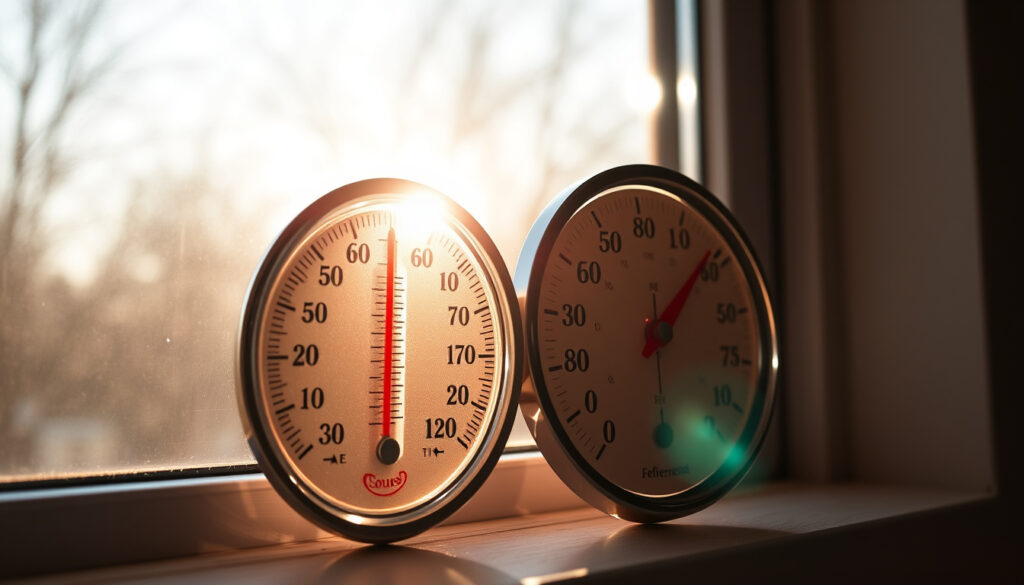
30 Degrees Celsius to Fahrenheit – Exact Conversion Guide
Converting temperatures between Celsius and Fahrenheit is a common task, whether you’re checking weather forecasts, following a recipe, or working on a science project. When the temperature reads 30 degrees Celsius, many people want to know the exact equivalent in Fahrenheit. The answer is straightforward: 30°C equals 86°F, a temperature that represents warm summer weather in most regions around the world.
Understanding this conversion becomes essential when traveling between countries that use different measurement systems. While most nations rely on the Celsius scale, the United States continues to use Fahrenheit for everyday temperature readings. This difference makes knowing how to convert between the two scales a practical skill for international communication and travel planning.
The direct answer to converting 30 degrees Celsius to Fahrenheit is exactly 86°F. This conversion is calculated using the standard formula that applies universally to all Celsius values. The mathematical process involves multiplying the Celsius temperature by 9/5 (or 1.8) and then adding 32 to the result. For 30°C, this calculation yields (30 × 1.8) + 32 = 54 + 32 = 86°F.
30°C converts to exactly 86°F with no rounding required. The formula °F = (°C × 9/5) + 32 produces an exact whole number for this specific conversion, making it easy to remember and verify.
30°C equals exactly 86°F, requiring no rounding or approximation. This temperature represents warm weather suitable for outdoor summer activities. The conversion formula applies universally to any Celsius temperature. Body temperature of approximately 37°C corresponds to 98.6°F. The freezing point of water is 0°C (32°F), while boiling is 100°C (212°F). At −40°, both scales show the same value, known as the point of parity.
| Celsius | Fahrenheit | Description |
| — | — | — |
| 0°C | 32°F | Freezing point of water |
| 10°C | 50°F | Chilly day |
| 20°C | 68°F | Room temperature |
| **30°C** | **86°F** | **Warm summer day** |
| 37°C | 98.6°F | Normal body temperature |
| 40°C | 104°F | Extremely hot day |
| 100°C | 212°F | Boiling point of water |
| −40°C | −40°F | Parity point (both scales equal) |
The conversion between Celsius and Fahrenheit relies on a well-established mathematical formula developed centuries ago. The Celsius to Fahrenheit equation is expressed as: °F = (°C × 9/5) + 32. This formula works because the two scales have different starting points and different rates of change between their reference points. The factor 9/5 accounts for the ratio between the scales, while adding 32 adjusts for the offset between the freezing points of water on each scale.
To perform the conversion manually, begin by multiplying the Celsius temperature by 9. Then divide that result by 5. Finally, add 32 to reach the Fahrenheit equivalent. Alternatively, you can multiply by 1.8 directly, which is the decimal equivalent of 9/5. This streamlined approach works equally well and reduces the calculation to two simple steps: multiply by 1.8, then add 32.
Converting from Fahrenheit back to Celsius requires reversing the process. The formula is: °C = (°F − 32) / 1.8. Using this equation, 30°F converts to approximately −1.1°C. The calculation proceeds as follows: subtract 32 from 30 (resulting in −2), then divide by 1.8 (yielding −1.11°C). This reverse conversion demonstrates that 30°F falls well below freezing, whereas 30°C represents comfortably warm conditions.
A quick estimation method for Celsius to Fahrenheit uses the approximation: multiply by 2 and add 30. For 30°C, this gives (30 × 2) + 30 = 90°F, which is close to the exact value of 86°F. This technique proves useful for everyday estimates when precision isn’t critical.
The National Institute of Standards and Technology maintains official standards for temperature measurement conversions, ensuring consistency across scientific and commercial applications. These standards provide the authoritative basis for all temperature conversions used in engineering, medicine, and industry. The formulas established by NIST guarantee reproducible results regardless of where or how the conversion is performed.
Yes, 30 degrees Celsius (86°F) is classified as a hot day in most weather contexts. This temperature falls comfortably within the range that most people consider warm or summery. At 30°C, the weather is typically warm enough for swimming, outdoor dining, and wearing light clothing such as t-shirts and shorts. The humidity level often determines whether 30°C feels pleasant or uncomfortably hot, with lower humidity making higher temperatures more tolerable.
For comparison, this temperature sits well above room temperature (approximately 20°C or 68°F) and significantly above the freezing point (0°C or 32°F). However, it remains well below body temperature (37°C or 98.6°F), so exposure to 30°C air will not cause overheating in a healthy person. The temperature also stays below dangerous heat thresholds that require medical attention, though extended exposure to direct sunlight at this temperature can still lead to sunburn or heat exhaustion if proper precautions are not taken.
A common source of confusion arises when comparing identical numerical values across the two scales. Thirty degrees Celsius and thirty degrees Fahrenheit represent vastly different conditions. As noted, 30°C feels warm and pleasant, while 30°F represents a freezing cold day well below the freezing point of water. This dramatic difference stems from the scales’ different reference points and rate of change.
The Celsius scale was designed with water’s freezing point at 0° and boiling point at 100°, creating a logical decimal-based system that aligns with metric principles. The Fahrenheit scale, developed earlier by Daniel Gabriel Fahrenheit in 1714, uses 32° for freezing and 212° for boiling, with smaller degree divisions that provide finer measurement precision for everyday weather reporting. Today, Celsius serves as the standard in most countries worldwide, while Fahrenheit remains primarily in use in the United States and its territories.
A comprehensive conversion table helps visualize where 30°C falls relative to other common temperature points. The following table presents key reference values that are useful for both everyday weather interpretation and scientific applications. Each row demonstrates the relationship between corresponding values on both scales.
| Temperature Context | Celsius | Fahrenheit |
| — | — | — |
| Freezing point of water | 0°C | 32°F |
| Chilly day | 10°C | 50°F |
| Room temperature | 20°C | 68°F |
| Warm day | 25°C | 77°F |
| Hot day | 30°C | 86°F |
| Very hot day | 35°C | 95°F |
| Extremely hot day | 40°C | 104°F |
| Normal body temperature | 37°C | 98.6°F |
| Boiling point of water | 100°C | 212°F |
| Parity point | −40°C | −40°F |
This table illustrates how linear the relationship between Celsius and Fahrenheit actually is. Every increase of 1°C corresponds to an increase of 1.8°F, and the pattern remains consistent across the entire range of temperatures from absolute zero to the boiling point of water. For quick reference, memorizing a few key points—such as the freezing and boiling temperatures—enables easy estimation of any intermediate value.
Temperature conversions are governed by international standards maintained by metrological institutions worldwide. The formulas used for converting between Celsius and Fahrenheit derive from the definitions of both scales relative to the properties of water. These standards ensure that conversions remain consistent across scientific research, industrial applications, and everyday use.
The Celsius scale defines 0°C as the freezing point of water and 100°C as the boiling point at standard atmospheric pressure. The Fahrenheit scale sets 32°F for freezing and 212°F for boiling, with the degree size calibrated to provide practical ranges for weather measurement.
The conversion formulas themselves are straightforward mathematical relationships that follow directly from these scale definitions. No experimental measurement or empirical data is required—the conversion from 30°C to 86°F follows necessarily from the mathematical definition of the Fahrenheit scale relative to Celsius. This certainty makes temperature conversion one of the most precise unit transformations in everyday use.
The conversion of 30°C to 86°F is exact with no rounding error. The formula produces a whole number result, making it ideal for verification and educational purposes. Always verify calculations using official conversion tools when precision is critical for scientific or medical applications.
Converting 30 degrees Celsius to Fahrenheit yields exactly 86°F using the standard formula °F = (°C × 9/5) + 32. This temperature represents warm summer weather comfortable for outdoor activities and light clothing. Understanding the relationship between these two scales proves valuable for international travel, scientific work, and everyday temperature interpretation. The mathematical certainty behind this conversion ensures consistent results regardless of the method or tools used. Whether you prefer working in Celsius or Fahrenheit, knowing how to convert between them opens up effective communication across different measurement traditions.
For those working with kitchen measurements or recipe conversions, understanding unit relationships proves equally important. How Many mL in a Tablespoon – Exact Conversions by Region provides detailed guidance on volume conversions that complement temperature knowledge for cooking and baking applications.
What is the formula for Celsius to Fahrenheit?
The formula is: °F = (°C × 9/5) + 32. Alternatively, multiply by 1.8 and add 32 to get the same result.
Is 30 degrees Celsius hot?
Yes, 30°C (86°F) is considered a hot day. Most people find this temperature warm enough for swimming, outdoor activities, and wearing light summer clothing.
What is 30 degrees Fahrenheit in Celsius?
30°F converts to approximately -1.1°C using the formula: °C = (°F − 32) / 1.8. This is well below freezing.
How hot is 30 degrees Celsius?
30°C represents comfortable summer warmth. It is significantly warmer than room temperature but cooler than body temperature or dangerous heat levels.
How do I quickly estimate Celsius to Fahrenheit?
A quick mental method: multiply the Celsius value by 2, then add 30. For 30°C, this gives approximately 90°F, close to the exact 86°F.
Why do Celsius and Fahrenheit give different values?
The scales have different reference points and degree sizes. Celsius uses water’s freezing and boiling points as anchors (0° and 100°), while Fahrenheit uses different anchors (32° and 212°).
More related posts
 Bright Red Blood in Stool: Causes and When to Worry
 Tori Spelling: Divorce, Money Loss, Daughter’s Health
 Ryan Gosling: His Biography, Family, and Net Worth
 Jennie Garth: 90210, Miscarriages, Feuds & Net Worth
 Melissa Joan Hart: Career, Family, and Political Views – 2025
 Gretchen Wilson: Accident, Recovery, and Masked Singer Win
 Canadian Tire St. Catharines: Hours, Locations & Flyer
 Bryan Kohberger: Evidence, Alibi, Plea & Sentencing