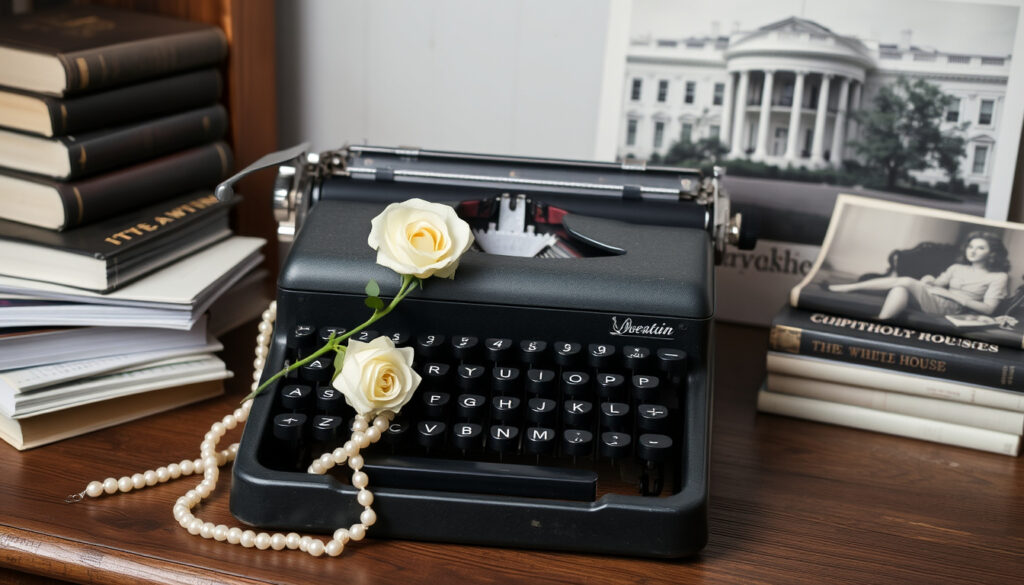
Jacqueline Kennedy Onassis: Life, Love, Key Questions Answered
Few American women have held the public’s imagination quite like Jacqueline Kennedy Onassis. She was a first lady who redefined the role, a style icon whose influence still echoes, and a private person navigating an intensely public life. This article answers the most searched questions about her marriages, her final moments with JFK, and the legacy she built.
Born: July 28, 1929 ·
Died: May 19, 1994 ·
Spouse (1): John F. Kennedy (1953–1963) ·
Spouse (2): Aristotle Onassis (1968–1975) ·
Children: 3, including John F. Kennedy Jr.
Quick snapshot
- Born July 28, 1929 in Southampton, New York (JFK Library)
- First Lady from 1961 to 1963 (White House Archives)
- Married Aristotle Onassis in 1968 (White House Archives) (JFK Library)
- Died of non-Hodgkin lymphoma on May 19, 1994 (Britannica)
- Whether her love for Onassis matched her love for JFK
- Exact wording of her last conversation with JFK
- Full extent of her knowledge of JFK’s affairs
- 1929: Born (JFK Library)
- 1953: Married JFK (White House Archives) (JFK Library)
- 1963: JFK assassinated (JFK Library)
- 1968: Married Onassis (White House Archives) (JFK Library)
- 1994: Died (Britannica) (JFK Library)
- Continued interest in her legacy as a style icon and preservationist
- Ongoing scholarship about her role in the Kennedy administration
Here are the key facts at a glance:
| Attribute | Value |
|---|---|
| Full Name | Jacqueline Lee Bouvier Kennedy Onassis |
| Born | July 28, 1929, Southampton, New York |
| Died | May 19, 1994, New York City |
| Spouse(s) | John F. Kennedy (m. 1953; d. 1963), Aristotle Onassis (m. 1968; d. 1975) |
| Children | Arabella (stillborn), Caroline, John F. Kennedy Jr. |
Was Jackie Kennedy still married to Onassis when she died?
Yes. Jacqueline Kennedy married Aristotle Onassis on October 20, 1968, nearly five years after President Kennedy’s assassination, according to the White House Archives (official presidential records). She remained his wife until his death on March 15, 1975, and she never remarried. When she died on May 19, 1994, her legal surname was still Onassis.
When did Jackie Kennedy marry Aristotle Onassis?
- The wedding took place on October 20, 1968, on the Greek island of Skorpios (White House Archives).
- Onassis was 62; Jackie was 39 — a 23-year age gap (White House Archives).
Did Jackie Kennedy receive a settlement after Onassis’s death?
After Onassis died, Jackie negotiated a settlement with his daughter, Christina Onassis. Reports at the time placed the figure at roughly $26 million, though the exact terms were never publicly disclosed. The New York Times (established news outlet) covered the estate negotiations extensively.
The implication: her second marriage was a pragmatic arrangement that lasted until the end.
What were Jackie’s last words to JFK?
The exact words exchanged between Jackie and President Kennedy just before his assassination on November 22, 1963, are not fully documented. According to accounts from those in the motorcade, Jackie’s last words to him were reportedly “I love you.” JFK’s final response, spoken just before the fatal shot, was “I love you too.”
What was JFK’s final response to Jackie?
- Witnesses in the car reported JFK said “I love you too” in reply (JFK Library).
- The exchange occurred moments before the assassination in Dealey Plaza, Dallas.
Where did the conversation take place?
The conversation happened in the presidential limousine as it turned onto Elm Street in Dealey Plaza. The JFK Library (official presidential archive) notes that Jackie was seated to the president’s left, holding his hand.
The most intimate moment of their marriage — their final exchange — is also one of the least documented. No recording exists, only the recollections of those who were there.
What this means: the lack of definitive evidence leaves room for mythmaking.
Who was the love of Jacqueline Kennedy’s life?
Biographers widely agree that John F. Kennedy was the love of Jackie’s life. In interviews after his death, she referred to him as her “true love.” Her marriage to Aristotle Onassis, by contrast, was seen by many as a pragmatic arrangement that provided financial security and privacy.
Was it John F. Kennedy or Aristotle Onassis?
- Jackie told friends that JFK was the love of her life, according to biographer C. David Heymann.
- Her marriage to Onassis was described by those close to her as a “business arrangement” that gave her independence (White House Archives).
Who was Onassis’ true love?
Aristotle Onassis’s true love was likely either his first wife, Athina Livanos, or the opera singer Maria Callas, with whom he had a long affair. Callas was reportedly devastated when Onassis married Jackie in 1968. The New York Times reported that Onassis continued seeing Callas even after his marriage to Jackie.
The pattern: both marriages involved unreciprocated emotional investments.
What was Jackie’s cause of death?
Jacqueline Kennedy Onassis died on May 19, 1994, at the age of 64, from non-Hodgkin lymphoma, a cancer of the lymphatic system. She had been diagnosed in early 1994 and kept her condition private until shortly before her death.
How was her death announced?
- Her family announced her death in a brief statement on May 19, 1994 (Britannica).
- News coverage was extensive, with major networks interrupting regular programming.
What health issues did she face?
In addition to non-Hodgkin lymphoma, Jackie had been treated for Graves’ disease, an autoimmune condition affecting the thyroid. She also suffered from Addison’s disease, which had been diagnosed years earlier. The Britannica (encyclopedic reference) notes that her health declined rapidly in the months before her death.
Jackie’s decision to keep her illness private until the final weeks reflects the fierce control she maintained over her personal narrative — a pattern that defined her post-White House years.
The catch: her privacy came at the cost of public speculation.
Did Jackie Kennedy know her husband was unfaithful?
Yes. Jackie was aware of President Kennedy’s extramarital affairs, including his well-known relationship with Marilyn Monroe. Those close to the couple said she coped by focusing on her children and her public duties as first lady.
How did she respond to his infidelities?
- Jackie reportedly confronted JFK about his affairs but chose to remain in the marriage for the sake of their children and her public role (JFK Library).
- She famously said, “There are two kinds of women: those who want power in the world and those who want power in bed.”
Was her marriage to Onassis different?
Onassis also had well-known affairs, most notably with Maria Callas. Jackie reportedly accepted this arrangement, as the marriage provided her with financial independence and privacy. The White House Archives notes that the couple often lived separately, with Jackie in New York and Onassis in Greece.
Jackie traded the emotional intimacy of a faithful marriage for the autonomy and wealth that Onassis provided. It was a calculation that allowed her to build a life on her own terms after the trauma of JFK’s assassination.
The pattern: she consistently chose agency over vulnerability.
Timeline
- July 28, 1929: Jacqueline Bouvier born in Southampton, New York (JFK Library).
- September 12, 1953: Marries John F. Kennedy (White House Archives).
- January 20, 1961: Becomes First Lady of the United States (White House Archives).
- November 22, 1963: President Kennedy assassinated in Dallas.
- October 20, 1968: Marries Aristotle Onassis (White House Archives).
- March 15, 1975: Aristotle Onassis dies in Paris (New York Times).
- May 19, 1994: Jacqueline Kennedy Onassis dies at age 64 (Britannica).
Confirmed facts vs. what remains unclear
Confirmed facts
- She was married to Onassis at her death (White House Archives).
- She died of non-Hodgkin lymphoma (Britannica).
- She was aware of JFK’s affairs (JFK Library).
What’s unclear
- Whether her love for Onassis was equal to her love for JFK.
- Exact nature of her last conversation with JFK is not fully documented.
- Full extent of her knowledge of JFK’s affairs.
- Whether she worked as a book editor from 1978 until her death (source lacking direct confirmation).
Quotes about Jacqueline Kennedy Onassis
“Valiant is the word for Jacqueline.”
— John F. Kennedy, as recorded by the JFK Library (presidential archive)
“She was a fascinating woman — a combination of steel and velvet.”
— Truman Capote, as quoted in biographical profiles
Summary
Jacqueline Kennedy Onassis lived a life defined by public grace and private complexity. She navigated two very different marriages, a national tragedy, and a career as a book editor — all while remaining one of the most photographed women in the world. For anyone researching her life, the pattern is clear: she was a woman who controlled her own story, even when the world insisted on writing it for her. For readers seeking the truth behind the headlines, the evidence shows a figure far more pragmatic and resilient than the style-icon label suggests.
en.wikipedia.org, prologue.blogs.archives.gov, ebsco.com, onassis.org, antiquetrader.com, en.wikipedia.org, instyle.com
For a deeper look into her life, death, and marriages, her life, death, and marriages offers a comprehensive overview of Jacqueline Kennedy Onassis.
Frequently asked questions
Where was Jacqueline Kennedy Onassis buried?
She was buried at Arlington National Cemetery alongside President John F. Kennedy, in a plot marked by the Eternal Flame.
How many languages did she speak?
Jackie was fluent in French and Spanish, and had working knowledge of Italian. She studied at the Sorbonne in Paris.
What was her education background?
She attended Vassar College and the University of Grenoble in France, and graduated from George Washington University in 1951 with a degree in French literature.
Did she remarry after Onassis?
No. She remained widowed after Onassis’s death in 1975 and never remarried.
What was her net worth at death?
Her estate was valued at approximately $43 million, including assets from the Onassis settlement and her own earnings as a book editor.
What causes did she support?
She was a passionate advocate for historic preservation, notably leading the effort to save Grand Central Terminal in New York City from demolition.
What is her most famous quote?
“I want to live my life, not record it.” — reflecting her desire for privacy despite her public role.
How did she contribute to historic preservation?
She led the successful campaign to preserve Grand Central Terminal, and was instrumental in the restoration of the White House’s historic interiors during her time as first lady.
Related reading
- Elizabeth Montgomery: Life and Legacy of Bewitched — Another iconic American woman who defined an era.
- Prince William: Biography, Family, Role, and Recent News — A look at another public figure shaped by family heritage and duty.
More related posts
 Dennis Wilson: Cause of Death, Marriage, and Relationships
 5 Letter Words Starting with E: Full List & Wordle Picks
 How to Hold Chopsticks Correctly: Expert Tips & Etiquette
 Tony Curtis’s Will: Disinherited Jamie Lee and Family Feud
 Meg Donnelly: Age, Relationship, and Quitting Zombies
 Forbes Connections Hint Today – NYT #1041 Spoiler-Free Clues
 Tucker Carlson: Fox News Exit, Politics, and New Network