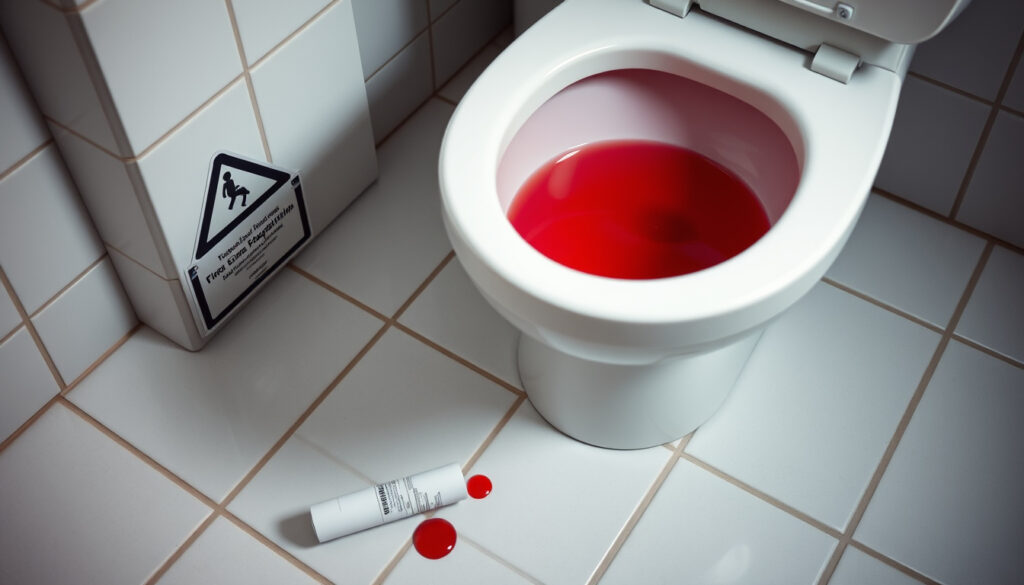
Bright Red Blood in Stool: Causes and When to Worry
Seeing bright red blood in your stool or on toilet paper can make anyone’s heart skip a beat. But that flash of red is often a sign that something is happening somewhere in your lower digestive tract — and in most cases it’s something treatable like hemorrhoids. This guide will help you understand the common causes, recognize when it might signal something more serious, and give you the confidence to take the right next step.
Most common cause: Hemorrhoids (Keck Medicine of USC (university hospital)) · Hemorrhoid prevalence: Affects about half of adults by age 50 (Keck Medicine of USC) · Colorectal cancer lifetime risk: About 4% (Keck Medicine of USC) · Anal fissure hallmark: Bright red blood with sharp pain during defecation (Cleveland Clinic (nonprofit academic medical center))
Quick snapshot
- Bright red blood on toilet paper or in the bowl (Moffitt Cancer Center (NCI-designated comprehensive cancer center))
- Often with anal itching or a lump near the anus (Keck Medicine of USC)
- Pain during straining or with hard stools (Keck Medicine of USC)
- Sharp pain during and after bowel movement (Cleveland Clinic)
- Small amount of bright red blood, often on the stool surface or toilet paper (Cleveland Clinic)
- Often triggered by constipation or passing hard stool (Cleveland Clinic)
- Blood may be darker or mixed with stool, not just on the surface (Moffitt Cancer Center)
- Often accompanied by unexplained weight loss and fatigue (Moffitt Cancer Center)
- Change in bowel habits (caliber, frequency) that persists (Moffitt Cancer Center)
- Painless bright red blood, often larger volume (MD Anderson Cancer Center (NCI-designated comprehensive cancer center))
- More common in people over 40 (MD Anderson Cancer Center)
- Bleeding comes from small pouches in the colon wall (MD Anderson Cancer Center)
Four common diagnoses, one key difference: the color and timing of the blood, plus whether there’s pain, often point to the most likely cause.
| Attribute | Details |
|---|---|
| Bleeding color | Bright red usually indicates bleeding from the lower GI tract (anus, rectum, sigmoid colon) (Cleveland Clinic) |
| Most common cause | Hemorrhoids (internal or external) (Keck Medicine of USC) |
| Pain indicator | Pain during bowel movements strongly suggests anal fissure (Cleveland Clinic) |
| Emergency sign | Large blood volume, dizziness, low blood pressure require urgent care (MD Anderson Cancer Center) |
What is the most common reason for bright red blood in stool?
Common causes
The most frequent source of bright red blood in stool is hemorrhoids — swollen veins in the rectum or anus. According to Keck Medicine of USC (university hospital), about half of adults develop hemorrhoids by age 50. Another common cause is an anal fissure, a small tear in the lining of the anus that produces sharp pain and a streak of bright red blood, as the Cleveland Clinic (nonprofit academic medical center) explains.
Despite the high prevalence of benign causes in younger adults, the statistical risk of colorectal cancer rises sharply after 50, so age must be a primary factor in deciding when to screen.
Less common but still relevant: diverticulosis. As MD Anderson Cancer Center (NCI-designated comprehensive cancer center) notes, painless bright red blood can also come from diverticula — small pouches that form in the colon wall, especially in people over 40.
Why bright red indicates lower GI bleeding
Blood that appears bright red has not traveled far through the digestive tract. The Cleveland Clinic explains that bright red blood typically means the bleeding site is in the lower colon, rectum, or anus. Darker red or maroon blood suggests bleeding higher in the colon, and black, tarry stools (melena) point to the stomach or small intestine. This color gradient is a fundamental diagnostic clue for doctors.
What this means: When you see bright red, the problem is likely near the exit — and often easier to diagnose and treat than bleeding from higher up.
The pattern: Bright red blood points to lower GI causes, with hemorrhoids being the most common. Age and accompanying symptoms determine next steps — younger, low-risk patients may monitor, but older adults or those with risk factors should proceed to colonoscopy.
When to worry about blood in your stool
Red flags for serious conditions
While most rectal bleeding is benign, certain features raise concern. According to Moffitt Cancer Center (NCI-designated comprehensive cancer center), colorectal cancer symptoms beyond bleeding include abdominal pain, changes in bowel habits, unexplained weight loss, and fatigue. A study in PMC (peer-reviewed medical journal) found that rectal bleeding mixed with stool significantly predicts colorectal cancer, and that age is the strongest predictor overall. The study also reported that even when hemorrhoids are present with bright red bleeding (reducing the likelihood of cancer), about 2% of such patients still have colorectal cancer.
- Persistent bleeding lasting more than a few days (Ubie Health (clinical decision support tool))
- Blood that is dark, maroon, or mixed throughout stool (Moffitt Cancer Center)
- Change in stool caliber (narrower than usual) (Moffitt Cancer Center)
- Family history of colorectal cancer (Ubie Health)
When to see a doctor
The Colorectal Cancer Alliance (patient advocacy organization) advises that anyone with rectal bleeding that lasts longer than a few days, is mixed with stool, or is accompanied by a change in bowel habits or family history of colorectal cancer should schedule an evaluation. Even a single episode of painless bright red blood warrants a discussion with a primary care provider if you are over 45 or have risk factors.
The catch: The 2% cancer rate in patients with hemorrhoids and bright red bleeding shows that even reassuring signs don’t rule out malignancy — only proper screening can.
What does hemorrhoid bleeding look like?
Appearance of hemorrhoid bleeding
Hemorrhoid bleeding has a classic presentation: bright red blood on the toilet paper, in the toilet bowl, or coating the stool surface. According to Keck Medicine of USC, this blood is usually separate from the stool itself. The Moffitt Cancer Center adds that hemorrhoid bleeding often comes and goes, and is typically triggered by straining during bowel movements or after sitting for long periods.
If you see bright red blood only on the toilet paper and never mixed in stool, and it happens after straining, the chance it’s hemorrhoids is high — but that doesn’t mean you should skip a colonoscopy if you’re 45 or older.
Associated symptoms
Hemorrhoids often come with anal itching, irritation, or a palpable lump near the anus (Keck Medicine of USC). Pain is usually mild unless a hemorrhoid becomes thrombosed (a blood clot inside). Internal hemorrhoids, which cause painless bleeding, are especially common. The pattern: Intermittent, straining-linked, bright red blood with no other systemic symptoms — that’s the hemorrhoid signature.
How to tell the difference between hemorrhoids and colon cancer
While both conditions can cause rectal bleeding, the differences in how the blood appears, when it occurs, and what other symptoms accompany it are critical. Here’s a side-by-side comparison based on data from several leading institutions.
| Attribute | Hemorrhoids | Colon Cancer |
|---|---|---|
| Blood color | Bright red, on surface of stool or toilet paper (Moffitt Cancer Center) | May be darker or bright, often mixed into stool (Moffitt Cancer Center) |
| Bleeding pattern | Intermittent, linked to straining or constipation (Ubie Health) | Persistent, not obviously linked to bowel movements (Moffitt Cancer Center) |
| Pain | Usually mild or absent; sharp pain suggests fissure (Keck Medicine of USC) | Often painless unless advanced; may cause abdominal cramping (Moffitt Cancer Center) |
| Stool changes | None | Narrower stools, change in caliber or frequency (Moffitt Cancer Center) |
| Associated symptoms | Anal itching, lumps, irritation (Keck Medicine of USC) | Unexplained weight loss, fatigue, incomplete bowel emptying (Keck Medicine of USC) |
| Risk factors | Constipation, pregnancy, obesity (Keck Medicine of USC) | Age >50, family history, inflammatory bowel disease (PMC (peer-reviewed medical journal)) |
Comforting signs like intermittent, bright red bleeding with known hemorrhoids still carry a 2% cancer risk. That means relying on symptoms alone is never sufficient — colonoscopy remains the gold standard for high-risk groups.
The implication: If you’re over 45 or have a family history, even classical hemorrhoid bleeding deserves a screening test — the cost of missing a cancer is far higher than the inconvenience of a colonoscopy.
When should you go to the ER for bright red blood in stool?
Signs of massive bleeding
Most rectal bleeding is small-volume and can wait for a clinic visit. But certain scenarios require immediate emergency attention. MD Anderson Cancer Center lists large amounts of blood — more than a few tablespoons — as a red flag. Other emergency signs include dizziness, fainting, rapid heart rate, and low blood pressure, which suggest significant blood loss.
- More than a few tablespoons of bright red blood in the toilet (MD Anderson Cancer Center)
- Dizziness or feeling faint when standing (MD Anderson Cancer Center)
- Severe abdominal or rectal pain (MD Anderson Cancer Center)
- Blood accompanied by black or tarry stools (indicates upper GI source) (Cleveland Clinic)
Emergency symptoms summary
If you experience any of the above, go to the emergency room or call 911. Ubie Health emphasizes that large-volume bleeding, especially without pain, can come from diverticulosis and may require rapid intervention. The key is not to delay: hemorrhoids and fissures rarely cause dizziness or huge blood loss — those are signs of a more significant source.
Why this matters: Waiting for a primary care appointment when you have heavy bleeding and dizziness could be dangerous. The ER can stabilize you and identify the source with an urgent colonoscopy or CT scan.
What’s confirmed, what’s unclear
Confirmed facts
- Hemorrhoids are a common cause of bright red blood in stool (Keck Medicine of USC)
- Anal fissures produce bright red blood with pain during defecation (Cleveland Clinic)
- Colon cancer bleeding may be darker, persistent, and accompanied by weight loss (Moffitt Cancer Center)
What’s unclear
- Whether a single episode of painless bright red blood in a young, low-risk person is always benign without further testing (MD Anderson Cancer Center)
- Differentiating diverticular bleeding from colon cancer bleeding without imaging or colonoscopy (MD Anderson Cancer Center)
- Whether bright red blood from a low rectal tumor can be reliably distinguished from hemorrhoid bleeding by symptoms alone (Colorectal Cancer Alliance)
- Whether the 2% cancer risk in people with hemorrhoids is low enough to defer screening indefinitely in younger adults (PMC)
- Whether age alone should trigger colonoscopy even with classic hemorrhoid bleeding (Keck Medicine of USC)
The takeaway: While many factors point to benign causes, the statistical overlap with cancer means that screening, not symptom-spotting, remains the definitive answer for higher-risk groups.
Expert perspectives on rectal bleeding
“Bright red blood might be from something low in the colon or rectum, like diverticulosis or hemorrhoids.”
— Dr. W. Charles Richards, MD Anderson Cancer Center (gastrointestinal surgeon)
“Hemorrhoid bleeding is usually bright red and happens during or after a bowel movement. Colorectal cancer bleeding can be dark or bright and can occur at any time.”
The pattern: Both experts agree that the context of bleeding matters — but neither recommends relying on symptom observation alone for people at elevated risk.
While hemorrhoids and anal fissures are common causes of bright red blood in stool, it’s important to recognize when bleeding may signal a more serious condition.
Frequently asked questions
What should you do if you see a small amount of bright red blood in stool?
Start by noting whether you have pain, how often it happens, and if you’re due for colorectal cancer screening. If it’s a one-time event with no other symptoms, you can monitor, but a visit to a primary care doctor is still wise — especially if you are over 45 or have a family history of colon cancer (Moffitt Cancer Center).
Can bright red blood in stool be caused by a hemorrhoid if there is no pain?
Yes. Internal hemorrhoids often bleed painlessly. The blood is bright red and appears on toilet paper or in the bowl without discomfort. That’s why painless bleeding is not automatically reassuring — you need to consider your age and other risk factors (Keck Medicine of USC).
How is rectal bleeding diagnosed?
A doctor will take a history, perform a digital rectal exam, and often recommend a colonoscopy — especially if you are 45 or older. They may also ask for a stool test to check for hidden blood. The goal is to visualize the source and rule out polyps or tumors (Cleveland Clinic).
Is bright red blood in stool during pregnancy normal?
Hemorrhoids are very common in pregnancy due to increased pressure from the growing uterus and constipation. Bright red blood from hemorrhoids is not dangerous to the baby, but any bleeding during pregnancy should be discussed with an obstetrician to rule out other causes (Keck Medicine of USC).
Can certain medications cause bright red blood in stool?
Medications that thin the blood (e.g., aspirin, warfarin, clopidogrel) can make existing hemorrhoids or fissures bleed more noticeably. They don’t cause the bleeding in the first place, but they can increase the volume. Nonsteroidal anti-inflammatory drugs (NSAIDs) can also irritate the GI lining. Always report any new bleeding to your prescribing doctor (Cleveland Clinic).
Does a negative colon cancer screening rule out serious causes?
A negative colonoscopy (no polyps or cancer) dramatically reduces the chance that blood is from colon cancer. However, other causes like diverticulosis or hemorrhoids can still produce blood. If bleeding persists after a normal colonoscopy, further investigation for small bowel sources may be needed (Colorectal Cancer Alliance).
For anyone who sees bright red blood in their stool, the safest path is to avoid both panic and dismissal. Pair the symptoms (color, pain, frequency) with your personal risk profile — age, family history, other health conditions. The decision is clear: if you’re under 45 with no risk factors and a single episode of painless bright red blood, monitoring and a call to your doctor are reasonable. If you’re over 45, have a family history, or notice dark blood or weight loss, schedule a colonoscopy without delay — or head to the ER if bleeding is heavy. Delaying a colonoscopy when risk factors are present could miss an early-stage cancer, so prompt evaluation is the safest choice.
More related posts
 Seth Jarvis: Injury, Contract, Salary & Personal Life
 Charlize Theron: Tragedy, Children, and Net Worth
 Daniel Negreanu: Net Worth, Career & Personal Life (2026)
 Cast of Star Trek: Strange New Worlds – Full Crew List
 Nepal vs West Indies Cricket Match Scorecard – T20 Results
 Samsung S24 Ultra Price – Current Deals and Lowest Prices
 Pension Payment Dates 2026: Rates & Schedules
 That 70s Show Cast – Actors Characters and Where They Are Now