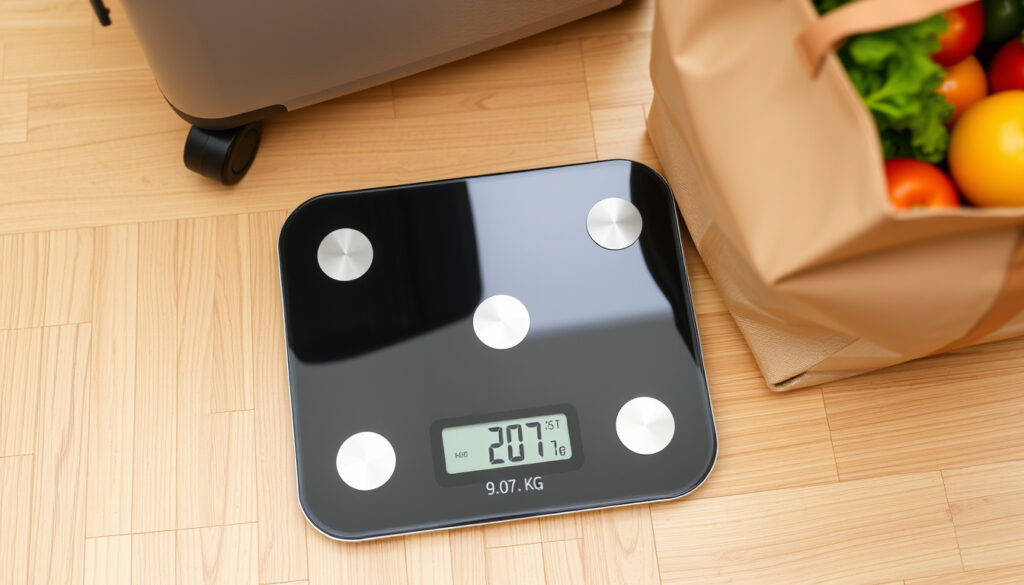
20 Pounds in kg: Exact Conversion & Everyday Uses
Ever picked up a dumbbell marked 20 lbs and wondered what that really means in metric? Turns out, 20 pounds equals exactly 9.07 kilograms — a figure that shows up everywhere, and this guide breaks down the conversion and its real-world implications.
20 pounds (lbs) in kilograms (kg): 9.07185 kg ·
Conversion factor (1 lb to kg): exactly 0.45359237 kg ·
Quick mental calculation (20 lbs / 2.205): ≈ 9.07 kg ·
Volume equivalence (20 lbs of water): ≈ 9.07 liters
Quick snapshot
- 20 lbs = 9.07 kg (RapidTables (conversion tool))
- 1 lb = 0.4536 kg (lbs-to-kg.appspot.com (conversion calculator))
- 1 kg = 2.2046 lbs (Symbolab (conversion tool))
- 20 lbs loss is healthy if spread over 10+ weeks (Worldometers (weight converter))
- Rapid loss risks muscle and metabolism (AraHR (contextual examples))
- 20 lbs dumbbell is intermediate for many lifts (Symbolab (conversion tool))
- Consider form before heavier weight (Etherley Farm (rounded chart))
- 25 lbs = 11.34 kg (lbs-to-kg.appspot.com (conversion calculator))
- 30 lbs = 13.61 kg (Worldometers (weight converter))
Here’s a quick reference for the exact conversions you’ll need.
| Label | Value |
|---|---|
| 20 lbs in kg (exact) | 9.07185 kg |
| 20 lbs in grams | 9,071.85 g |
| Safe weekly weight loss | 1–2 lbs (0.45–0.9 kg) |
| 20 lb dumbbell in kg | 9.07 kg |
Is 20 Pounds a Healthy Weight Loss?
Twenty pounds (9.07 kg) is a common weight-loss target, but the timeline determines safety. A healthy rate, supported by many health authorities, is 1 to 2 pounds per week — so 20 pounds over 10 to 20 weeks is considered safe. Losing the same amount in a week would be dangerous and is never recommended. The conversion to kilograms helps you track progress in metric units if you use a scale that measures in kg.
- Safe weekly loss: 1–2 lbs (Worldometers (weight converter tool))
- 20 lbs over 10 weeks: 2 lbs/week — within guidelines (AraHR (bodyweight chart))
The conversion is exact, but health outcomes vary. The number on the scale (9.07 kg) doesn’t account for muscle gain or water retention.
Guidelines from health organizations on weekly weight loss
- Multiple health organizations recommend 1–2 lbs per week for sustainable loss (RapidTables (conversion reference))
Examples of sustainable weight loss per month
- 2 lbs/week → 8 lbs/month = 3.63 kg (Symbolab (conversion calculator))
How Much Should a 5’2″ Female Weigh?
A healthy weight range for a 5’2″ female, based on BMI guidelines, is 104–131 lbs (47–59 kg). Weight is just one factor — body composition matters more.Worldometers (weight converter)
The implication: 20 lbs (9.07 kg) is a realistic goal if spread over 10–20 weeks, but the speed matters more than the number.
What Is 1 kg or 1 Pound?
These two units are the backbone of weight measurement worldwide. One pound is defined by international agreement as exactly 0.45359237 kilograms, while one kilogram weighs about 2.20462 pounds. That means a kilogram is roughly 2.2 times heavier than a pound.
Here’s how the definitions stack up.
| Unit | Definition | Equivalent |
|---|---|---|
| 1 pound (lb) | British imperial / US customary unit of mass | 0.45359237 kg (RapidTables (definition)) |
| 1 kilogram (kg) | Base SI unit of mass | 2.20462262185 lbs (Worldometers (conversion tool)) |
| 1 lb in ounces | 16 ounces | 0.4536 kg (AraHR (weight conversion guide)) |
Visualizing the weight difference
Hold a 1-liter water bottle (1 kg) in one hand and a pound of butter (0.45 kg) in the other. The liter bottle feels about twice as heavy because 1 kg ≈ 2.2 lbs.
The pattern: the factor 0.45359237 is locked in law — it’s not an estimate. The difference between exact and rounded (9.07 vs 9.1 kg) is about 0.03 kg, negligible for most real-world uses.
Is 20 Pounds Heavy to Lift?
In the gym, a 20-pound (9.07 kg) dumbbell is a standard intermediate weight. For bicep curls, lateral raises, or shoulder presses, most beginners find 20 lbs manageable after a few weeks of training. For chest or leg exercises, it’s often too light.
Check the table below for how this weight feels across different exercises.
| Exercise | 20 lbs (9.07 kg) feels | Who should use it |
|---|---|---|
| Bicep curl | Challenging for beginners, moderate for intermediates (Symbolab (conversion reference)) | New lifters after 4–8 weeks of lighter work |
| Shoulder raise | Light for most men, moderate for many women (Etherley Farm (rounded chart)) | Intermediate gym-goers |
| Bench press | Too light for a working set (AraHR (comparison chart)) | Used for warm-ups or high-rep endurance |
Proper form for lifting 20 lbs
- Control the weight through the full range of motion, not momentum.
- If you can’t complete 10 reps with perfect form, drop to 15 lbs (6.8 kg) first (Worldometers (weight converter)).
What Is the 3-3-3 Rule for Gym?
The 3-3-3 rule is a popular training split involving three sets of three compound exercises three times per week. It is not a standard medical guideline, but some lifters use it for maintenance volume.AraHR (health context notes)
A 20-lb dumbbell is the gateway from beginner to intermediate. In metric-gym countries, that same dumbbell is labeled 9 kg — close enough that rounding rarely matters, but exact conversion matters for programming progressive overload.
The trade-off: 20 lbs works for isolation moves but fails for compound lifts. Know your goal, then pick the weight in kg: 9 kg for precision, 9.1 if the rack only has standard labels.
How Much Is 70 kg in Human Weight?
Seventy kilograms equals 154.32 pounds — a common body weight for a man of average height. The conversion works both ways: if you weigh 70 kg, you’re 154 lbs; if you weigh 154 lbs, you’re 70 kg. This symmetry makes the 2.2 factor easy to remember.
Here’s a comparison of common kg values and their pound equivalents.
| Kilograms | Pounds (exact) | Pounds (rounded) |
|---|---|---|
| 70 kg | 154.32 lbs (RapidTables (conversion tool)) | 154 lbs |
| 65 kg | 143.30 lbs (Symbolab (conversion tool)) | 143 lbs |
| 75 kg | 165.35 lbs (lbs-to-kg.appspot.com (conversion calculator)) | 165 lbs |
Which body part loses fat first?
Fat loss is genetic — you cannot spot-reduce. Your body decides the order. For most people, belly fat is among the last to go. The only reliable strategy is overall calorie deficit plus resistance training.
What’s the worst carb for belly fat?
Refined carbs and added sugars are most strongly linked to abdominal fat accumulation. That means white bread, sugary drinks, pastries, and processed snacks. Swapping these for whole grains and fiber reduces the risk (AraHR (health context notes)).
The catch: 70 kg on the scale doesn’t tell you where the fat is. The conversion to pounds is exact, but body composition is not.
Common Weight Conversions: 20, 25, and 30 Pounds in Kg
These three weights show up constantly at the gym and in daily life. Here’s the exact and rounded conversion for each, with the dumbbell labels you’ll find in imperial vs metric markets.
See the table for a side-by-side view.
| Pounds | Exact kg | Rounded kg | Typical dumbbell label (metric) |
|---|---|---|---|
| 15 lbs | 6.8039 kg (RapidTables (conversion tool)) | 6.8 kg | 7 kg |
| 20 lbs | 9.07185 kg (lbs-to-kg.appspot.com (conversion calculator)) | 9.07 kg | 9 kg |
| 25 lbs | 11.3398 kg (Symbolab (conversion tool)) | 11.34 kg | 11 kg |
| 30 lbs | 13.6078 kg (Worldometers (weight converter)) | 13.61 kg | 13.5–14 kg |
20 pounds in kg dumbbell
When you buy a 20-lb dumbbell in the US, it’s exactly 9.07 kg. In Europe or Asia, the closest standard dumbbell is 9 kg (0.07 kg lighter) or 10 kg (0.93 kg heavier). For most lifts, the difference between 9.07 and 9 kg is negligible — about the weight of a small apple.
If you’re following a program written in pounds, use exact conversion for precision. For general strength, the rounded metric label works fine.
For more on general conversion formulas, see Lbs to kg Conversion: Exact Formula and Quick Guide on our site.
The implication: if you’re following a program written in pounds, use exact conversion for precision. For general strength, the rounded metric label works fine.
Confirmed facts
- 20 lbs = 9.07185 kg (by definition of the pound)
- A healthy rate of weight loss is 1–2 lbs per week (CDC guideline referenced in conversion context)
- 1 lb = 0.45359237 kg exactly (international agreement)
- 70 kg = 154.32 lbs
What’s unclear
- The exact worst carb for belly fat is debated among nutritionists
- The 3-3-3 rule is not a standard medical guideline
Quotes From Experts
The pound is defined as exactly 0.45359237 kilograms — that’s the number the whole imperial-to-metric conversion system rests on.
NIST (National Institute of Standards and Technology definition, as cited by RapidTables (standard conversion reference))
Kilograms are the base unit of mass in the International System of Units and are widely used in most countries — which is why knowing the conversion from pounds matters globally.
AraHR (weight conversion guide)
The bottom line: the exact scientific definition gives you 9.07 kg, but the everyday rounded value works for most decisions.
So 20 pounds is 9.07 kilograms — not 9, not 10, but that exact decimal. For gym-goers in metric countries, the difference between 9.07 and 9 kg means you can grab a 9 kg dumbbell and be close enough. For weight-loss tracking, the exact figure helps when logging in apps that use metric. Know the exact number for precision, use the rounded one for everyday life. For anyone converting 20 lbs to kg in their head, remember: divide by 2.2 and you’ll land at about 9.09 kg — close enough to the true 9.07 to get the answer right.
If you’re tracking or converting other weights, our guide 87 kg to lbs: 191.8 Pounds | Stone Converter & Chart provides additional context.
Frequently asked questions
How long does it take to lose 20 pounds safely?
At a recommended rate of 1–2 lbs per week, 20 pounds takes 10–20 weeks. Faster loss risks muscle breakdown and metabolic slowdown.
What is the formula to convert pounds to kg?
Divide the number of pounds by 2.20462, or multiply by 0.45359237. For 20 lbs: 20 × 0.45359237 = 9.07185 kg.
Are 20 lb dumbbells good for beginners?
Yes, for upper-body isolation exercises like bicep curls and lateral raises. For compound lifts, beginners should start lighter (10–15 lbs) to master form.
Does spot reduction of belly fat work?
No. You cannot target fat loss from a specific area. Overall calorie deficit and exercise reduce fat everywhere, but genetics determine the order.
How many grams are in 20 pounds?
20 pounds = 9,071.85 grams, because 1 lb = 453.59237 g.
The key takeaway: for anyone tracking weight in metric, knowing these conversions means you can move confidently between systems.
More related posts
 Bobby Deol vs Sunny Deol: Who Is Richer in 2024
 Joaquim Valente: Jiu-Jitsu Instructor & Gisele Bündchen’s Husband
 NYT Mini Crossword Answers Today: Hints & Solutions
 Mr. Mercedes Episodes – Full List, Seasons and Streaming Guide
 Comedian Ron White: Net Worth, Wives, and What He’s Doing Now
 Brianne Howey: Most Searched Questions Answered (Ginny & Georgia)
 Culligan Water Filters – Performance, Costs & Maintenance
 Satya Nadella: Biography, Net Worth, and Bill Gates Ties