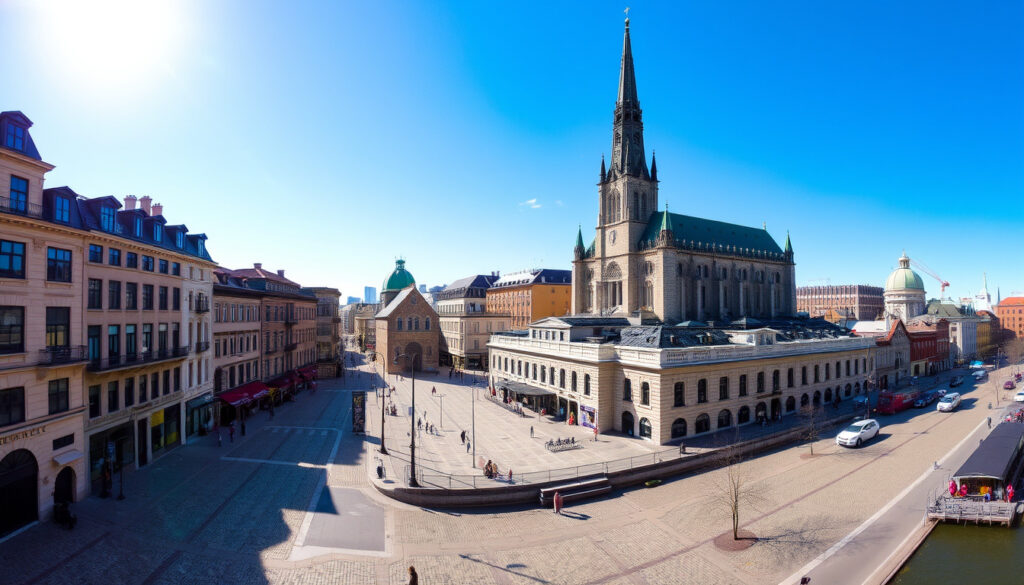
What to Do in Montreal: Top Attractions & Itineraries
There’s a reason Montreal sticks in people’s minds long after they leave — it’s not just the cobblestone streets or the scent of bagels, but the way French and English cultures collide in everyday life. According to Tourisme Montréal, the city’s official tourism authority, Mount Royal Park and the Notre-Dame Basilica are core winter anchors for any visit.
Population: 1.8 million (metro area 4.3 million) · Official language: French (English widely spoken) · Nickname: Sin City (historical); 404 (area code) · Famous for: Poutine, Mount Royal, Notre-Dame Basilica · Best time to visit: May–October for weather; December–February for winter festivals
Quick snapshot
- Notre-Dame Basilica is the most visited attraction in Montreal (Tourisme Montréal)
- Montreal is the second-largest French-speaking city in the world after Paris (BRB Travel Blog)
- Poutine originated in Quebec in the 1950s (Hotel Monville)
- Exact origin of the “Sin City” nickname is debated
- How many days ideal for a visit varies by traveler preference
- Whether Notre-Dame Basilica outranks all other city attractions by visitor count (source-dependent)
- Founding of Ville-Marie (1642) — Tourisme Montréal
- Expo 67 World’s Fair (1967) — historical record (Tourisme Montréal)
- Summer Olympics (1976) — historical record (Tourisme Montréal)
- Continued growth as a year-round destination with emphasis on winter tourism
- Expansion of cultural districts like Quartier des Spectacles
The table below lays out the essential logistics a traveller needs before booking.
| Attribute | Detail |
|---|---|
| Population | 1.8 million (metro 4.3 million) |
| Official Language | French |
| Currency | Canadian Dollar (CAD) |
| Time Zone | EST (UTC‑5) |
| Famous Food | Poutine, Bagels, Smoked Meat |
| Major Airport | Montréal‑Trudeau (YUL) |
The implication: Montreal packs enough data points that a quick-reference table helps travellers orient before digging into the neighbourhoods.
What should you not miss in Montreal?
What are the top five things to see in Montreal?
First‑timers should prioritise the Notre‑Dame Basilica, whose interior is widely described as a masterpiece of Gothic Revival architecture. Mount Royal Park, standing at 234 metres, offers panoramic views from the Kondiaronk Belvedere (BRB Travel Blog). Old Montreal’s cobblestone streets and the Old Port anchor the historic district. For local flavour, try poutine and a smoked‑meat sandwich. The Underground City (RÉSO) provides a warm indoor shopping network during winter (Hotel Monville).
What is Montreal, Canada best known for?
Montreal is best known for its European character, vibrant arts scene, and food culture. It is often called the second‑largest French‑speaking city in the world after Paris. The city’s summer festivals — Just for Laughs and the Montreal International Jazz Festival — draw international crowds. In winter, the Fête des Neiges at Parc Jean‑Drapeau transforms the park into a snow‑play zone (Wanderlust Chloe).
What to do in Montreal for free?
Free activities abound. Walk or snowshoe through Mount Royal Park, explore the street art in the Plateau, and visit Marché Jean‑Talon without spending a penny. The outdoor video‑projection circuit Cité Mémoire runs 24 tableaux across Old Montreal. Many museums offer free evenings; the Montreal Museum of Fine Arts is free for permanent collections.
What to do in Montreal with kids?
Families can head to the Biodôme, the Botanical Garden, and the Insectarium — all part of Space for Life. La Ronde amusement park and the Montreal Science Centre are also popular. In winter, Parc Jean‑Drapeau’s Snow Festival offers tubing, ice skating, and snowshoeing suitable for all ages (Wanderlust Chloe).
Is Montreal worth visiting?
Why is Montreal called Sin city?
During Prohibition in the 1920s–1940s, Montreal’s lax licensing and thriving nightlife earned it the nickname “Sin City.” The exact origin is debated, but historians point to the city’s open bar scene and illegal gambling dens of that era.
What makes Montreal different from other Canadian cities?
Montreal’s dual identity — French‑speaking yet bilingual, historic yet modern — gives it a European feel rare in North America. The cost of living is lower than in Toronto and Vancouver, and the arts and nightlife scene is arguably more vibrant per capita. Tourisme Montréal highlights the city’s affordability as a key draw for international visitors.
The implication: for travellers seeking a culturally rich, budget‑friendly city with a distinct identity, Montreal delivers in spades.
Budget travellers should note that free walking tours operate daily from Place Jacques-Cartier in Old Montreal — no booking required, just a tip at the end. This single choice can save you $30–50 per person on Day 1.
Are 3 days enough for Montreal?
How many days in Montreal is enough?
A three‑day trip covers the essentials: Old Montreal, Mount Royal, the Plateau, and one or two museums. Budget travellers can hit highlights in two days, but for full immersion — including neighbourhood exploration and day trips — four to five days are recommended.
What to do in Montreal for a day?
One day: start at the Notre‑Dame Basilica, walk through Old Montreal to the Old Port, climb Mount Royal, and finish with poutine in the Plateau. For winter, add ice skating at Parc La Fontaine.
What to do in Montreal this weekend?
A weekend itinerary: Saturday — Old Montreal, Basilica, and the Underground City; Sunday — Mount Royal morning hike, Mile End bagel crawl, and Jean‑Talon Market. In winter, swap the hike for the Snow Festival at Parc Jean‑Drapeau.
The pattern: three days is the sweet spot for a first visit, but the city’s layered neighbourhoods reward longer stays.
What is the best month to go to Montreal?
What to do in Montreal in winter?
Winter is peak festival season. The Montreal Snow Festival (January–February) fills Parc Jean‑Drapeau with tubing, ice skating, and snowshoeing (Wanderlust Chloe). Indoor options include Bota Bota spa in the Old Port and exploring the Underground City. Hotel rates drop in January, making it a budget‑friendly window.
What to do in Montreal today? (seasonal)
If visiting in summer, check festival calendars. In fall, the foliage on Mount Royal is spectacular. Any day, the Cité Mémoire light show runs at dusk in Old Montreal.
The catch: summer brings crowds and higher prices, winter offers festivals and deals but requires bundling up. May–June and September–October provide the best balance of mild weather and fewer tourists.
Is Montreal a walkable city?
How to get around Montreal?
Downtown and Old Montreal are highly walkable. The metro and bus network (STM) is efficient and affordable. For neighbourhood exploration, the BIXI bike‑share system is popular from April to November. Walking is ideal for the Plateau and Mile End, where the main attractions are close together (Hotel Monville).
What to do in Montreal for adults? (nightlife/bar hopping)
Adults gravitate to the bars and clubs of the Plateau, Mile End, and the Old Port. Quartier des Spectacles hosts live music and comedy. The city’s legal drinking age is 18, and the craft beer scene is thriving.
What this means: a walkable core means you can cover a lot without a car, saving time and money while experiencing the city’s texture.
First-time visitors who skip the car save roughly $40–60 per day on parking alone — money better spent on smoked meat sandwiches and a round at a microbrewery in Mile End.
3-Day Montreal Itinerary: A Step-by-Step Plan
Three days gives you a solid taste of Montreal. This itinerary balances iconic sights, food, and downtime, with a winter adaptation where noted.
- Day 1: Old Montreal & the Basilica. Start at Place d’Armes, tour Notre‑Dame Basilica, walk through Old Montreal to the Old Port. Lunch at a bistro for poutine. Afternoon: explore the Underground City (RÉSO) for shopping. Evening: dinner in Quartier des Spectacles. Winter version: swap afternoon walk for indoor museums.
- Day 2: Mount Royal, Plateau & Mile End. Hike to the Kondiaronk Belvedere. Descend into the Plateau for bagels (St‑Viateur or Fairmount). Lunch at a smoked‑meat joint. Afternoon: browse Mile End boutiques and street art. Evening: bar hop on Boulevard Saint‑Laurent. Winter version: snowshoe on Mount Royal, then warm up at a café.
- Day 3: Markets & Neighbourhoods. Morning at Marché Jean‑Talon in Little Italy. Lunch at a food stall. Afternoon: visit a museum (Musée d’art contemporain de Montréal is a top pick). Evening: the Cité Mémoire light show (free). Winter version: replace the market with the Snow Festival at Parc Jean‑Drapeau.
For budget travellers, free walking tours (look for guides) can replace paid museum entries on Day 3.
The itinerary works because it groups sights by geography: Day 1 stays south of Sherbrooke, Day 2 climbs the mountain and its eastern slope, Day 3 heads north to the market district. The result is minimal transit time and maximum street-level exploration.
Upsides and Downsides of Visiting Montreal
Upsides
- European atmosphere in North America
- Affordable compared to Toronto or Vancouver
- Exceptional food scene (poutine, bagels, smoked meat)
- Year‑round festivals and activities
- Walkable core and efficient public transit
Downsides
- Harsh winter (January averages −10°C)
- Parking and driving can be confusing
- French language barrier for some services (though English is widely spoken)
- Tourist crowds in summer
The catch: the trade-offs are clear — you trade warm weather for lower prices in winter, and you trade solitude for festival energy in summer. Neither is wrong; it depends on what you value.
Confirmed Facts & What’s Unclear
Confirmed facts
- Notre‑Dame Basilica is the most visited attraction in Montreal
- Montreal is the second‑largest French‑speaking city in the world after Paris
- Poutine originated in Quebec in the 1950s
What’s unclear
- Exact origin of the “Sin City” nickname
- How many days ideal for a visit — varies by traveler
- Whether Notre-Dame Basilica visitor counts surpass all other city attractions (data varies by source methodology)
“The Plateau is where you feel Montreal’s pulse — it’s multicultural, walkable, and every second storefront is a café or a vintage shop. Tourists who skip it miss the real city.”
— Local tour guide (Montreal)
“Montreal transformed itself from a Prohibition‑era party town into a modern cultural capital by embracing its festivals and preserving its old quarters. That reinvention is what makes it so magnetic today.”
— Urban historian
The choice is clear after a few days in Montreal: the city rewards those who slow down. For the first‑time visitor, the implication is simple: skip the car, pack layers, and plan at least three days — or risk leaving with a long list of “next time.”
anadventurousworld.com, practicalwanderlust.com, curioustravelbug.com, perfectdaysomewhere.com
For a comprehensive overview of the city’s highlights, check out this detailed guide to top Montreal attractions and itineraries that covers everything from Old Montreal to Mount Royal.
Frequently asked questions
What is Montreal known for food‑wise?
Montreal is famous for poutine (fries, cheese curds, gravy), Montreal‑style bagels (denser and sweeter than New York‑style), and smoked‑meat sandwiches.
Is English spoken in Montreal?
Yes, English is widely spoken, especially in downtown, tourist areas, and the West Island. French is the official language, but most services are bilingual.
What is the best area to stay in Montreal?
Old Montreal for charm, Plateau for local vibes, Quartier des Spectacles for nightlife. Downtown is central and convenient.
Do I need a car in Montreal?
No. Public transit (metro and bus) covers the main areas. Walking and BIXI bikes are great for the core. Parking is expensive and limited.
Is Montreal safe for solo travelers?
Yes, Montreal is generally safe. Standard precautions apply at night and in less crowded areas. The Plateau and Old Montreal are well‑lit and busy.
What are the top museums in Montreal?
Musée d’art contemporain de Montréal, Montreal Museum of Fine Arts, Pointe‑à‑Callière archaeology museum, and the Biodôme are top picks.
Can you use Uber in Montreal?
Yes, Uber operates in Montreal. Taxis are also available. The metro runs until about 1 AM.
What is the legal drinking age in Quebec?
The legal drinking age is 18, lower than in Ontario (19).
More related posts
 Sam Altman: Biography, Net Worth, OpenAI CEO, Personal Life
 Canadian Tire St. Catharines: Hours, Locations & Flyer
 Canadian Visitor Visa: Requirements, Fees, and Steps
 Waylon Jennings: Death, Feuds, Biggest Hit & Buddy Holly
 Raj Nidimoru: Wife, Ex-Wife, Daughter, Net Worth 2025
 Lance Stroll: Career Win, Family, Controversy & F1 Performance
 Katrina Kaif Biography: Age, Religion, Husband, Net Worth & More
 Chris Stapleton Facts: Illness, Marriage & Tour